Benjamin Graham: Father of Value Investing and Legacy
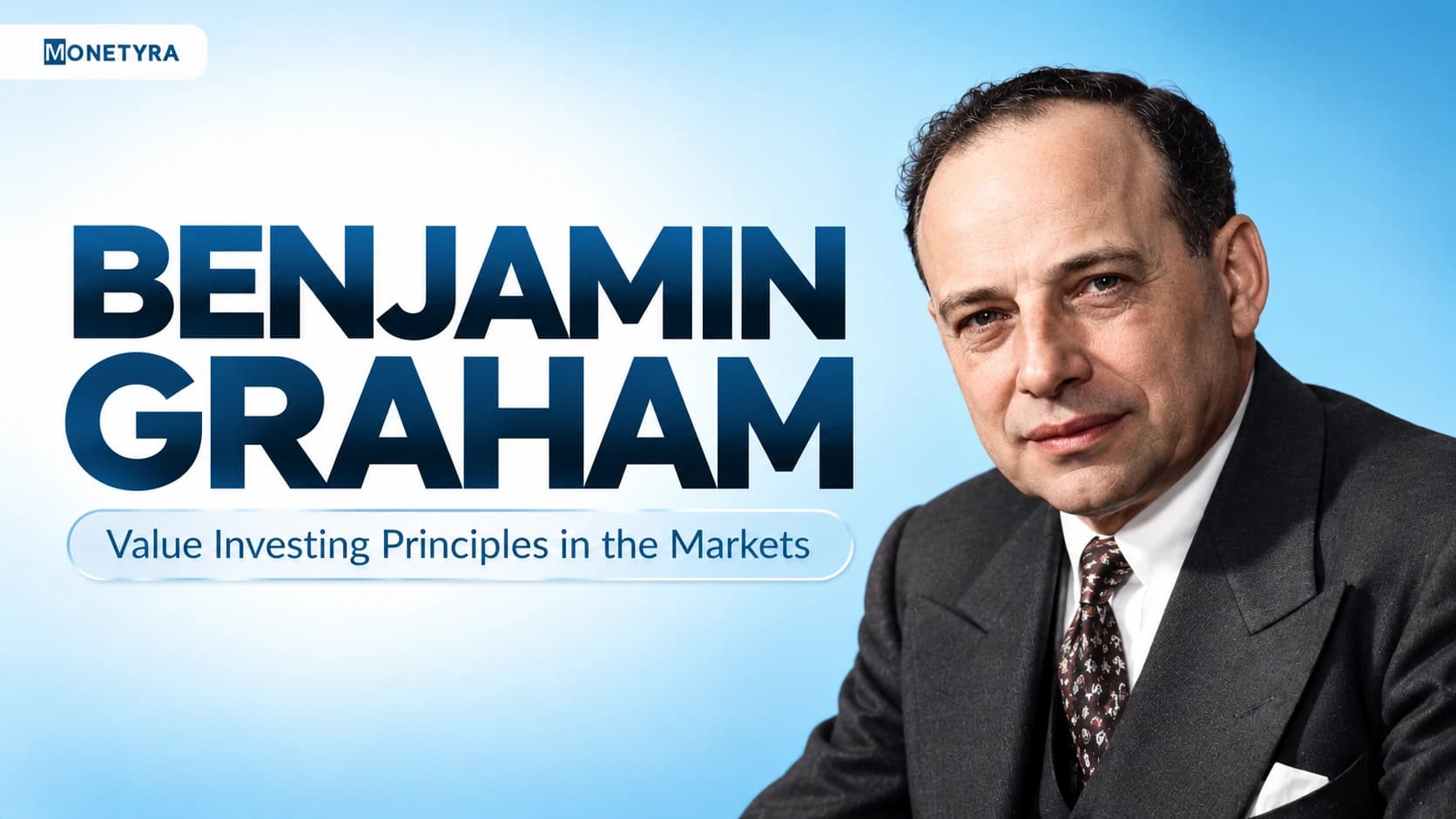
Modern financial markets frequently oscillate between speculative momentum and sudden liquidity contractions, leaving market participants exposed to sharp capital impairment. In an era dominated by algorithmic trading and rapid speculative rotations, the systematic discipline established by Benjamin Graham remains the foundational benchmark for assessing enterprise worth. Graham replaced emotional market guesswork with rigorous balance-sheet audits, establishing analytical standards that continue to govern disciplined capital allocation across global and Indian equity bourses.
Quick Takeaways
- Benjamin Graham established fundamental security analysis by decoupling enterprise intrinsic value from daily stock market quotations.
- His core operational framework requires an uncompromising margin of safety alongside strict balance-sheet liquidity metrics like Net Current Asset Value.
- Applying classical Graham filters to Indian listed equities requires screening beyond statistical cheapness to avoid corporate governance traps and promoter pledge risks.
Who Is Benjamin Graham?
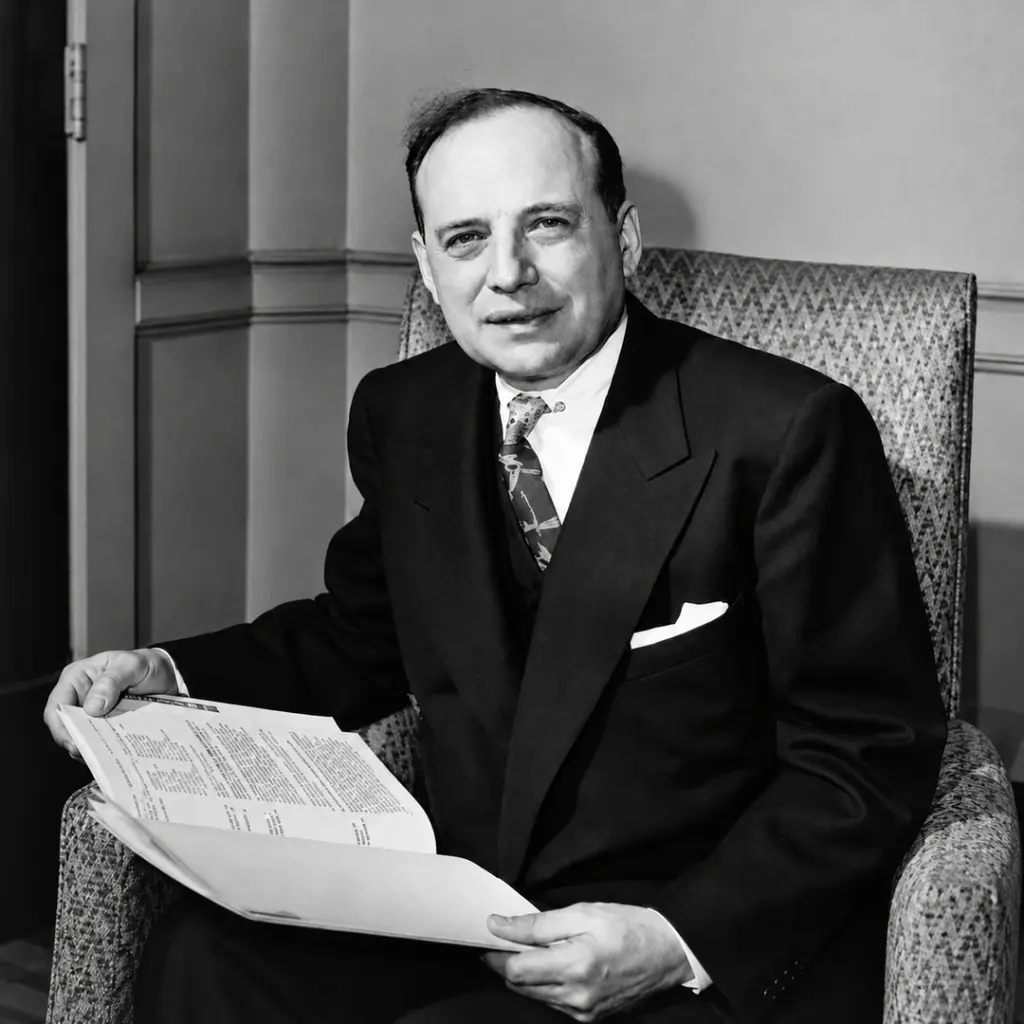
- Lifespan: 1894 – 1976.
- Historical Roles: Co-founder and Senior Partner of Graham-Newman Corporation; Adjunct Professor of Finance at Columbia Business School.
- Current Position & Recognition: Posthumously revered as the historical pioneer and foundational father of value investing.
- Estimated Net Worth: Approximately $3 million.
- Key Publications: Security Analysis (1934, co-authored with David Dodd); The Intelligent Investor (1949).
Image source: thestreet.com
In the short run, the market is a voting machine, but in the long run, it is a weighing machine. — Benjamin Graham
History
Born in London and raised in New York, Graham experienced severe economic hardship following his father’s death and the family’s financial losses during the Bank Panic of 1907. After graduating near the top of his class from Columbia University at age twenty, he declined invitations to teach mathematics, philosophy, and English to join Wall Street. The catastrophic Wall Street Crash of 1929 dismantled his initial fund’s capital, an experience that forged his aversion to speculative leverage and permanently shaped his balance-sheet-focused risk management framework.
Achievement
Graham transformed equity selection from an unregulated numbers game into an academic, professional discipline. Alongside David Dodd, he codified fundamental analysis in Security Analysis, establishing modern standards for financial statement auditing, earnings power evaluation, and capital preservation. He later founded the Graham-Newman Corporation, achieved an exceptional multi-decade compounding track record, and personally mentored investing luminaries, most notably Warren Buffett and Walter Schloss.
The Core Graham Tenets: Margin of Safety and Mr. Market
The architecture of Graham’s philosophy rests on two conceptual pillars designed to preserve capital across cyclical market regimes. The first is the margin of safety Benjamin Graham developed as an operational prerequisite: the practice of purchasing a security at a significant discount to its appraised intrinsic value. This discount does not aim to engineer speculative windfalls; rather, it provides an analytical buffer against operational degradation, macroeconomic disruption, and balance-sheet miscalculations.
To explain price volatility, Graham introduced the allegory of “Mr. Market,” an obliging business partner who arrives daily offering to purchase or sell shares at prices fluctuating from wild euphoria to deep despair. Graham instructed investors to treat Mr. Market as a liquidity provider rather than an authoritative appraiser of enterprise value. When market quotations drop below intrinsic worth, the disciplined investor acquires assets; when prices exceed intrinsic worth, the investor refrains or sells.
Warning: Relying on market momentum without establishing a calculated margin of safety leaves equity capital vulnerable to sudden macro compression.
Recognizing that intrinsic value operates as a range rather than an exact decimal point enables investors to execute the Contrarian Investing framework without attempting to predict broader macroeconomic turning points.
Benjamin Graham’s Quantitative Formulas: NCAV and the Graham Number
Graham formulated mathematical rules to eliminate subjective bias from security selection. His most conservative liquidity screen was the Net-Current-Asset Value (NCAV) formula, colloquially known as the “net-net” strategy. Graham sought enterprises trading in the open market at a price below two-thirds of their liquid working capital, effectively acquiring fixed assets, goodwill, and future earnings power for nothing.
NCAV Per Share = (Current Assets – Total Liabilities – Preferred Stock) ÷ Total Outstanding Shares
For profitable enterprises possessing consistent historical earnings and stable operating leverage, Graham formulated a benchmark ceiling for conservative valuation known as the Graham Number.
Graham Number = Square Root of (22.5 × Earnings Per Share × Book Value Per Share)
The constant of 22.5 was derived from Graham’s belief that a defensive investor should not pay a price-to-earnings ratio above 15 combined with a price-to-book multiple above 1.5. Understanding how these baseline metrics interact with an enterprise’s PE Ratio Meaning & Formula allows analysts to identify mispriced securities before market recognition occurs.
| Graham Metric | Classical Historical Rule (1934/1949) | Modern Application on Indian Bourses (NSE/BSE) | Practical Limitations & Traps |
|---|---|---|---|
| Net-Current-Asset Value (NCAV) | Buy stocks trading at under 66% of NCAV per share | Rare in healthy mid/large caps; occasionally appears in distressed small caps | High incidence of promoter capital diversion, obsolete inventory, or uncollectible receivables |
| Price-to-Earnings (PE) Ceiling | Maximum trailing PE of 15 for defensive portfolios | Standard for mature industrial/PSU stocks; too restrictive for high-growth sectors | Omits operational reinvestment capacity and intangible software/IP economic moats |
| Price-to-Book (PB) Threshold | Maximum PB of 1.5 (or combined PE × PB ≤ 22.5) | Useful screen for capital-heavy manufacturing, PSU banks, and infrastructure | Book value fails to capture high Return on Equity (ROE) asset-light enterprises |
| Debt-to-Current-Assets | Total funded debt must not exceed net current assets | Crucial balance sheet filter for capital preservation on NSE and BSE | Capital-intensive sectors (power, utilities) structurally require long-term project debt |
Applying Graham’s Framework to Indian Equities
Deploying classical value metrics on the Bombay Stock Exchange (BSE) and National Stock Exchange (NSE) requires careful contextual calibration. In developed Western economies during the Great Depression, severe corporate liquidation values frequently matched actual realizable liquidity. In modern emerging markets, screening purely for low price-to-book or deep-discount earnings multiples can lead straight into persistent value traps.
Indian retail equity investors must layer Graham’s balance-sheet checks on top of statutory corporate governance disclosures. Compliance filings mandated under the SEBI (Listing Obligations and Disclosure Requirements) Regulations, 2015 require analysts to evaluate related-party transactions, independent director resignations, and auditor qualification notes. A low market multiple is rarely an automatic bargain if an enterprise displays high promoter share pledging or persistent working capital loans to related entities.
Tip: Screen for unencumbered cash flows and low promoter pledging before treating any low-PE small-cap stock as a Graham-style deep-value opportunity.
Furthermore, the late twentieth-century evolution from asset-heavy manufacturing to capital-light technological enterprises—such as domestic IT services and digital consumer ecosystems—means that accounting book value often understates economic earnings power. Modern practitioners like Charlie Munger adapted Graham’s baseline by paying fair prices for superior quality enterprises, acknowledging that compounding high operational capital efficiency frequently outperforms holding cheap, deteriorating businesses.
Monetyra’s Take: Graham’s margin of safety is an immutable financial law: paying too high a valuation multiple for any enterprise inevitably degrades long-term risk-adjusted returns. However, mechanical application of Graham’s 1949 “cigar-butt” balance sheet screens in modern India will largely populate your portfolio with structurally challenged micro-caps or corporate governance minefields. Indian retail investors should adopt Graham’s emotional detachment toward price volatility and his balance-sheet skepticism, while pairing them with contemporary cash-flow generation and promoter integrity metrics.
Conclusion
Benjamin Graham reshaped financial capitalism by proving that rigorous fundamental appraisal, not speculative timing, protects capital over extended economic cycles. His core tenets—the disciplined separation of business value from market quotation, the demand for a quantitative margin of safety, and the elimination of emotional bias—remain as valid on modern electronic exchanges as they were during the paper-ledger era of Wall Street. Investors who master these defensive balance-sheet foundations build durable equity portfolios capable of surviving volatile market contractions.
Study the frameworks of legendary investors to sharpen your capital allocation.
FAQs
He pioneered modern security analysis and value investing, authoring The Intelligent Investor and emphasizing fundamental business evaluation with capital preservation.
At his death in September 1976, Benjamin Graham left an estate of about $3 million (roughly $16 million today), built through investment partnerships, advisory work, and equity compounding.
Known as the father of value investing; Benjamin Graham created the concepts of “margin of safety” and “Mr. Market,” wrote The Intelligent Investor, and mentored Warren Buffett.
Graham created quantitative value screens, notably the Graham Number: Square Root of (22.5 × EPS × Book Value Per Share). He also pioneered the Net-Current-Asset Value (NCAV) formula, which screens for enterprises trading below two-thirds of current assets minus all liabilities, isolating deeply undervalued balance sheets.
He earned the title by turning speculative investing into a rigorous discipline based on fractional business ownership and intrinsic value.
“In the short run, the market is a voting machine, but in the long run, it is a weighing machine”: prices track sentiment today, but fundamentals over time.
Disclaimer: This article was written with the help of AI and reviewed by Monetyra’s editorial team. It is for educational purposes only and should not be considered financial advice. Investing in equity securities involves significant risk of capital loss and is not suitable for all investors. Historical financial philosophies, valuation metrics, and case studies do not guarantee future investment returns. Please consult a SEBI-registered investment advisor before making any financial allocation decisions.
In India, equity investments and publicly listed corporate disclosures are governed by the Securities and Exchange Board of India (SEBI). Readers are advised to verify the regulatory standing and official financial statements of listed companies through official exchange filings before deploying capital.