Who Is Carl Icahn? The Activist Investor Profile
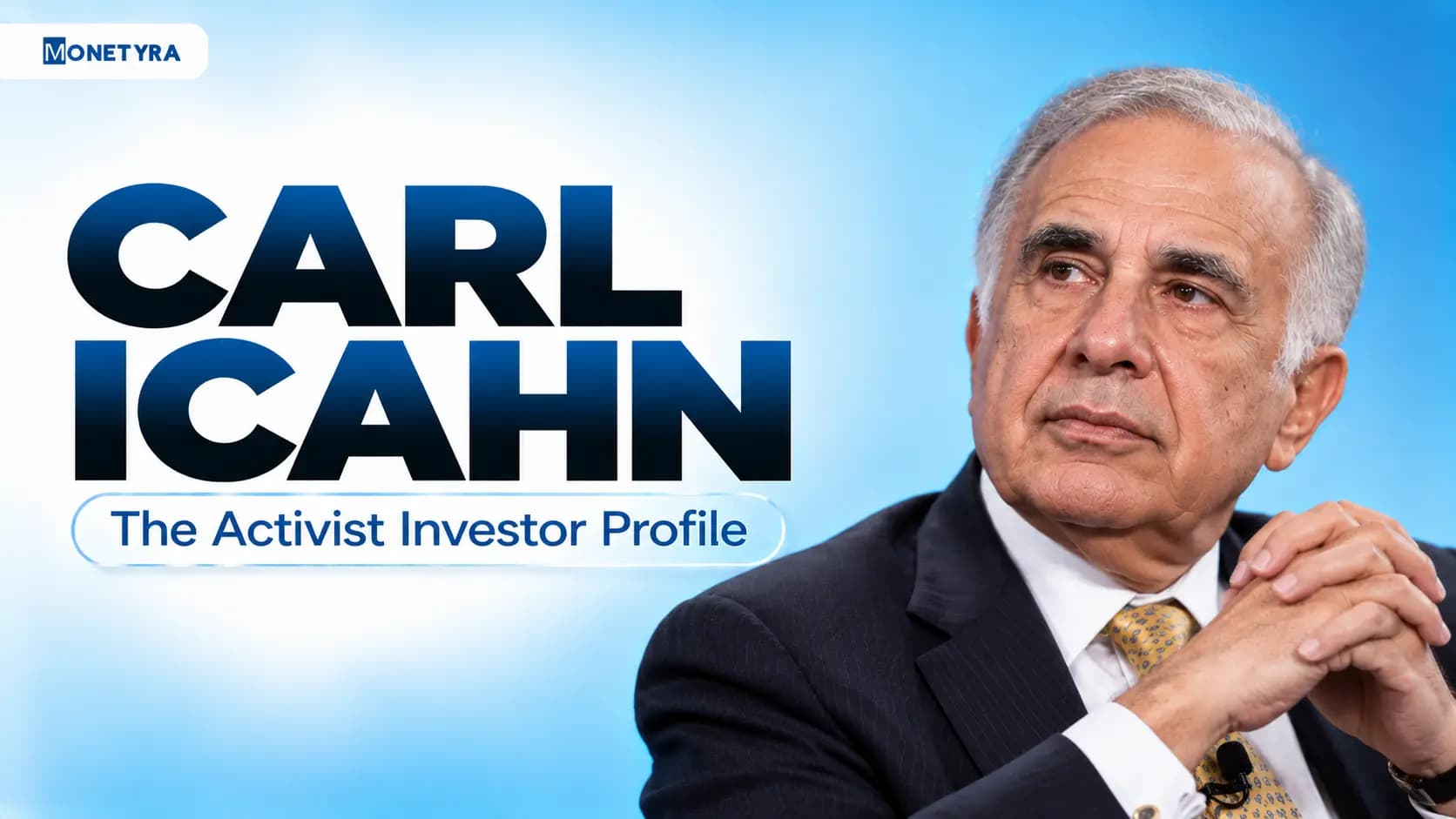
Wall Street has long-term compounders who let time do the work, and activists who push companies to change quickly. For over five decades, Carl Icahn has been active in corporate boardrooms.
He turned minority stakes into restructurings, dividend payouts, and management changes. He began as a 1980s corporate raider and later became an activist investor with a public campaign style. This guide explains how that approach works, so you can judge its risks and lessons.
Quick Takeaways
- Carl Icahn is an American activist investor and the controlling shareholder of Icahn Enterprises L.P. (IEP), known for buying large stakes in undervalued firms to push for strategic changes.
- His investment playbook uses public proxy fights, regulatory filings, and board pressure to demand share buybacks, asset spin-offs, and operational restructurings.
- The activist approach can unlock balance-sheet value, but it can also bring volatility, corporate disruption, and the risks of holding-company leverage.
Who Is Carl Icahn?
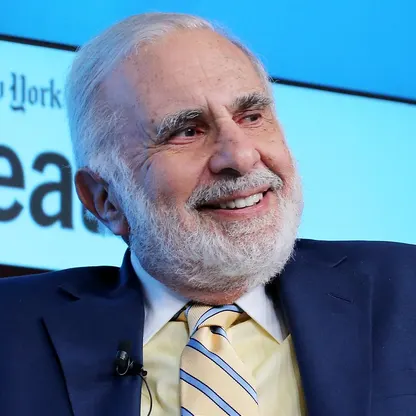
- Net worth: Forbes estimated $3.2 billion in March 2026, while other trackers estimate $4.2 billion to $4.4 billion (September–October 2026). These are estimates, not official figures, and they change with the price of Icahn Enterprises units.
- Current position: Chairman of the Board and majority controlling shareholder of Icahn Enterprises L.P. (IEP).
- Primary investment vehicle: Icahn Enterprises L.P., a publicly traded, multi-industry master limited partnership operating across energy, automotive, food packaging, real estate, and investment funds.
- Investment philosophy: Deep-value contrarian investing combined with shareholder activism to unlock trapped enterprise value.
Image source: forbes.com
In business and investing, there are two kinds of people: those who manage to get things done, and those who take the credit. Be in the first category; there is far less competition.
History
Icahn grew up in the Far Rockaway neighborhood of Queens, New York. He earned a philosophy degree from Princeton University in 1957. After a brief period in medical school, he joined the U.S. Army.
He entered Wall Street as an options broker in 1961. With a loan from his uncle, he bought a seat on the New York Stock Exchange in 1968 and founded Icahn & Co., which first specialized in options arbitrage. By the late 1970s and 1980s, he shifted toward acquiring controlling interests in undervalued businesses. His hostile bids and proxy battles included Tappan Stove, Marshall Field, and Phillips Petroleum.
Achievement
Over five decades, Icahn became one of the best-known activist investors in the United States. He used minority stakes to push management teams on capital allocation.
His key campaigns include the 1985 takeover of Trans World Airlines (TWA) and his push for Apple to buy back billions of dollars of shares in 2013. He also demanded that eBay spin off PayPal in 2014 and pushed to separate Motorola’s mobile business.
The Icahn Playbook: How Activist Investing Works
Carl Icahn’s approach looks for companies where internal inefficiencies, poor capital allocation, or surplus cash push the market value below the intrinsic asset value. Passive fund managers simply exit underperforming positions. An activist investor buys a large minority stake and starts an outside campaign to push for structural change.
Identify Mispriced Firm → Accumulate 5%–10% Stake → File Schedule 13D with the U.S. Securities and Exchange Commission (SEC) → Public Pressure & Board Demands → Corporate Action (Buyback / Spin-off)
- Targeting trapped intrinsic value: The campaign starts with balance-sheet analysis. The activist looks for companies with large asset values, idle cash, or non-core divisions that drag down margins.
- Accumulating a meaningful toehold: Activists generally accumulate a 5% to 9.9% equity position before or around the public filing threshold. In the United States, a stake above 5% triggers a Schedule 13D disclosure to the SEC.
- The “Icahn Lift”: When an activist’s 13D filing becomes public, the market price often rallies immediately as institutional market participants anticipate balance-sheet restructuring, asset sales, or increased dividends.
- Public shareholder pressure: If private talks fail, Icahn turns to open shareholder letters, media appearances, and proxy contests to replace directors with his own nominees.
- Executing capital returns: With enough board pressure, the target company may announce a large share buyback, cost restructuring, or spin-off. Our guide Buyback of Shares — Mechanics & Tax Rules explains how buybacks work.
Tips: If you study a company’s cash position, check whether management returns capital through dividends and buybacks, or holds idle cash that lowers Return on Equity (ROE).
Corporate Raider vs. Shareholder Champion: Battles and Controversies
Opinions on Carl Icahn’s legacy are divided. Corporate executives have often called him an opportunistic corporate raider. Many shareholders see him as a check on self-serving management.
The main critique of 1980s corporate raiding is the use of high-yield debt to fund hostile tender offers. Some raids were followed by greenmail, where shares are sold back to the company at a premium, or by asset stripping.
Icahn’s 1985 takeover of Trans World Airlines (TWA) remains one of Wall Street’s most scrutinized deals. Icahn took the airline private in 1988 through heavy borrowing. He sold half of its London routes to American Airlines for an estimated $445 million in 1991, and he made an estimated $469 million profit on the deal. TWA was left with heavy debt and declared bankruptcy in 1992.
His later campaigns showed how activism can unlock value without breaking up operations. In 2013, Icahn took a multi-billion-dollar position in Apple. He publicly urged CEO Tim Cook to increase share repurchases, given the company’s large overseas cash reserves. Apple subsequently expanded its capital return program, and Icahn exited in 2016 with an estimated gain of about $2 billion.
| Target Company | Campaign Year | Primary Intervention / Demand | Strategic Outcome |
|---|---|---|---|
| TWA | 1985 | Hostile Leveraged Buyout (LBO) & Takeover | Acquired controlling stake; loaded company with debt; filed for bankruptcy in 1992 |
| Texaco | 1988 | Threatened a proxy fight for five board seats | Lost the contest; signed a standstill agreement in January 1989; his Texaco stake was later sold for an estimated $700M profit |
| Motorola | 2007 | Sought board seats and urged separation of the mobile devices business | Was denied a board seat in 2007; Motorola later split into Motorola Solutions and Motorola Mobility (2011) |
| Apple | 2013 | Demanded large share buyback programs | Apple expanded buybacks by billions; Icahn exited with an estimated ~$2B gain |
| eBay | 2014 | Demanded spin-off of PayPal payment unit | Management initially resisted, then agreed; PayPal spun off successfully in 2015 |
Warning: If you follow an activist into a stock right after a public 13D filing, the initial “Icahn Lift” may fade if management defends against the takeover for years.
Scrutiny later focused on Icahn Enterprises L.P. (IEP) itself. In May 2023, short-seller Hindenburg Research published a critical report. It alleged that IEP traded at an unsustainable premium to its net asset value (NAV) and relied on debt and unit issuances to fund its quarterly distributions.
IEP’s market price dropped, and regulators made inquiries. The episode shows that activist vehicles can face the same balance-sheet risks that activists target in other firms.
Activist Investing in Indian Markets: Can the Playbook Work Under SEBI Rules?
Copying Carl Icahn’s hostile takeover and proxy playbooks in Indian public markets faces regulatory and structural hurdles. The goal of improving corporate efficiency is still relevant, but Indian corporate governance works differently from the United States.
- Promoter-dominated shareholding structures: In the US, listed companies often have dispersed ownership, and management may hold less than 2% of the equity. An activist with 8% can pressure the board. In India, promoter groups often hold 40% to 70%, so a hostile board takeover is hard without promoter consent.
- SEBI corporate governance regulations: The Securities and Exchange Board of India (SEBI) oversees corporate governance under the SEBI LODR framework (SEBI Listing Obligations and Disclosure Requirements Regulations, 2015). Under these provisions, material related party transactions require approval by a majority of minority shareholders. This gives public shareholders a legal veto without a hostile proxy fight.
- Institutional stewardship over corporate raiding: Indian shareholder activism is largely driven by domestic institutional investors (DIIs), such as mutual fund asset management companies and insurers like the Life Insurance Corporation of India (LIC). Mutual funds follow SEBI’s Stewardship Code, and insurers follow the stewardship code of the Insurance Regulatory and Development Authority of India (IRDAI). Instead of hostile campaigns, Indian institutions typically use electronic proxy voting to reject excessive executive pay, unviable mergers, or unfavorable royalty agreements.
American activism leans on public confrontation. In India, shareholder influence works mainly through regulatory transparency and statutory minority protections.
Monetyra’s Take: Carl Icahn’s campaigns suggest that management teams sometimes address capital allocation only after outside pressure from committed shareholders. However, retail investors should not mistake short-term activist announcements for durable compounding. Studying an activist’s balance-sheet critique can teach you about corporate inefficiency. But if you take leveraged positions during proxy battles, a long board fight can expose your portfolio to large swings.
Conclusion
Carl Icahn moved from options broker in the 1960s to one of Wall Street’s best-known activists, and his campaigns shaped debates about board accountability. His 1980s takeover strategies drew scrutiny for heavy debt financing. His later campaigns showed that focused shareholder involvement can change inefficient corporate structures and return idle cash to equity holders.
For long-term investors, the lesson of the Icahn framework is not hostile warfare. It is a close focus on capital allocation, balance-sheet discipline, and independent corporate oversight.
Sharpen your market perspective by learning how institutional capital allocators evaluate corporate governance and valuation.
FAQs
Carl Icahn is an American billionaire financier, activist investor, and majority owner of Icahn Enterprises L.P. (IEP). He is known for buying large stakes in public companies to push for strategic changes, operational overhauls, and higher capital returns for shareholders.
Forbes estimated Carl Icahn’s net worth at $3.2 billion in March 2026, while other trackers estimate $4.2 billion to $4.4 billion (September–October 2026). Most of his wealth is tied to his stake in Icahn Enterprises L.P., so it moves with the price of IEP units.
Icahn built his first capital through options arbitrage in the 1960s and 1970s. From the 1980s, he took large stakes in undervalued companies and pushed for spin-offs, buybacks, and restructurings. He also manages his public vehicle, Icahn Enterprises.
The Carl Icahn investment strategy combines deep-value analysis with active shareholder engagement. He targets firms that trade at a discount to underlying assets. He seeks board seats and presses management to buy back shares, sell unprofitable divisions, or spin off valuable subsidiaries.
In 1985, Icahn took control of Trans World Airlines (TWA) in a hostile takeover and took it private in 1988 using leveraged debt. He later sold half of its London routes to American Airlines for an estimated $445 million. Heavy debt ultimately forced TWA into bankruptcy in 1992, and the deal is often cited as a case study on the risks of leveraged buyouts.
Disclaimer: This article was written with the help of AI and reviewed by the Monetyra editorial team. It is for educational purposes only and should not be considered financial advice. Past performance does not guarantee future results. Trading and investing in financial instruments involve significant risk of loss and are not suitable for all investors. Please consult a licensed financial advisor before making any investment or trading decision.
In India, equity markets and corporate governance are regulated by the Securities and Exchange Board of India (SEBI). Readers are advised to verify the regulatory status of listed corporate actions, corporate disclosures, and fund managers, and to ensure compliance with applicable Indian securities laws before investing.