Parag Parikh: The Pioneer of Behavioral Value Investing
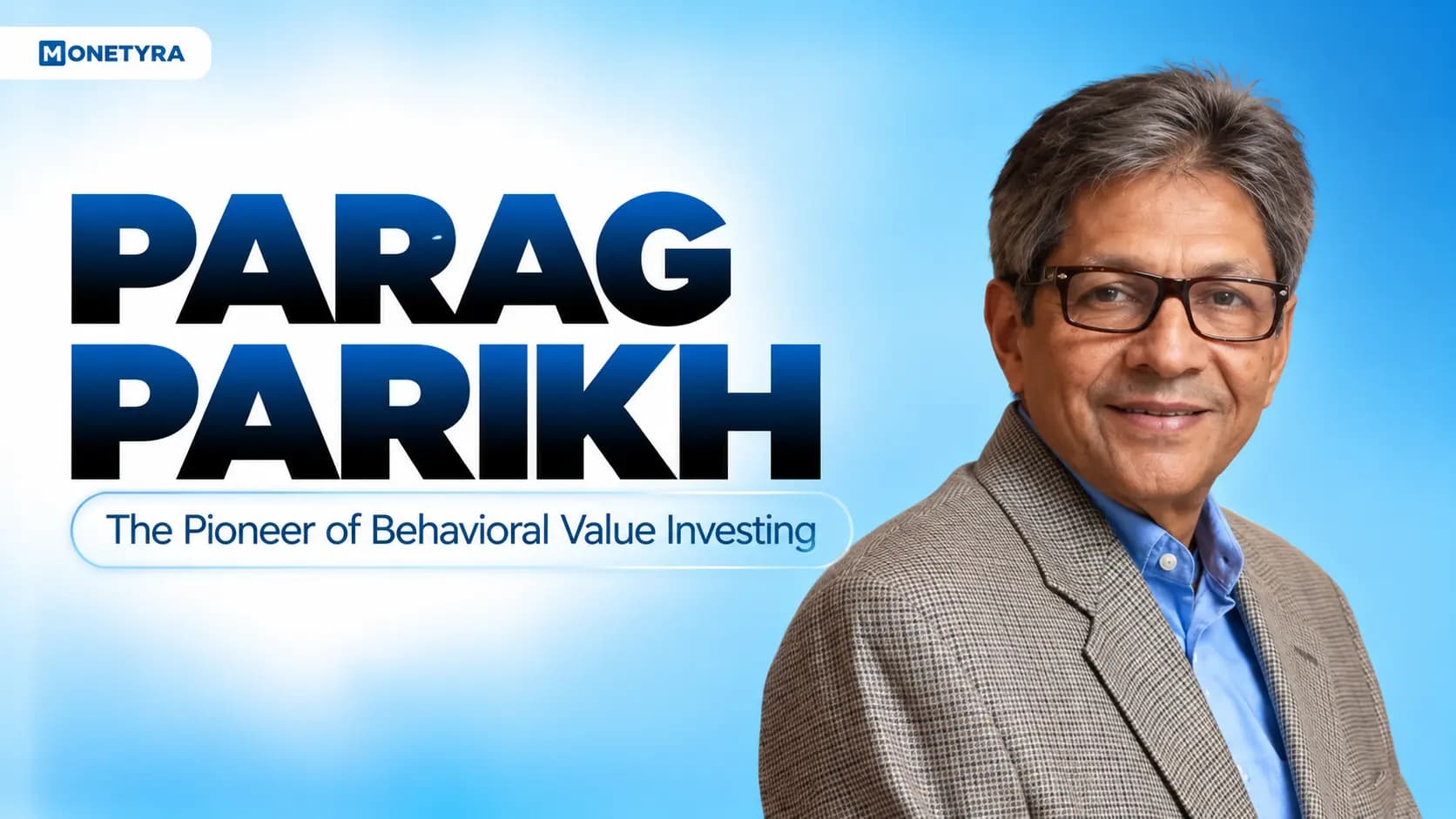
Long-term wealth in equity markets often depends less on formulas than on how well you control emotional impulses. Parag Parikh stressed this point years before behavioral finance became common in Indian asset management. He was a stockbroker, author, and fund manager who taught retail investors that temperament often matters more than short-term analysis. His work shaped how many domestic investors think about volatility, portfolio construction, and capital preservation.
Quick Takeaways
- Parikh was an early advocate of behavioral finance and value investing in India.
- His framework centered on the “Law of the Farm”: long-term compounding, promoter integrity, and fund managers who invest their own money.
- Deep-value strategies can underperform during long liquidity-driven rallies, so you need strong psychological discipline.
Who Is Parag Parikh?
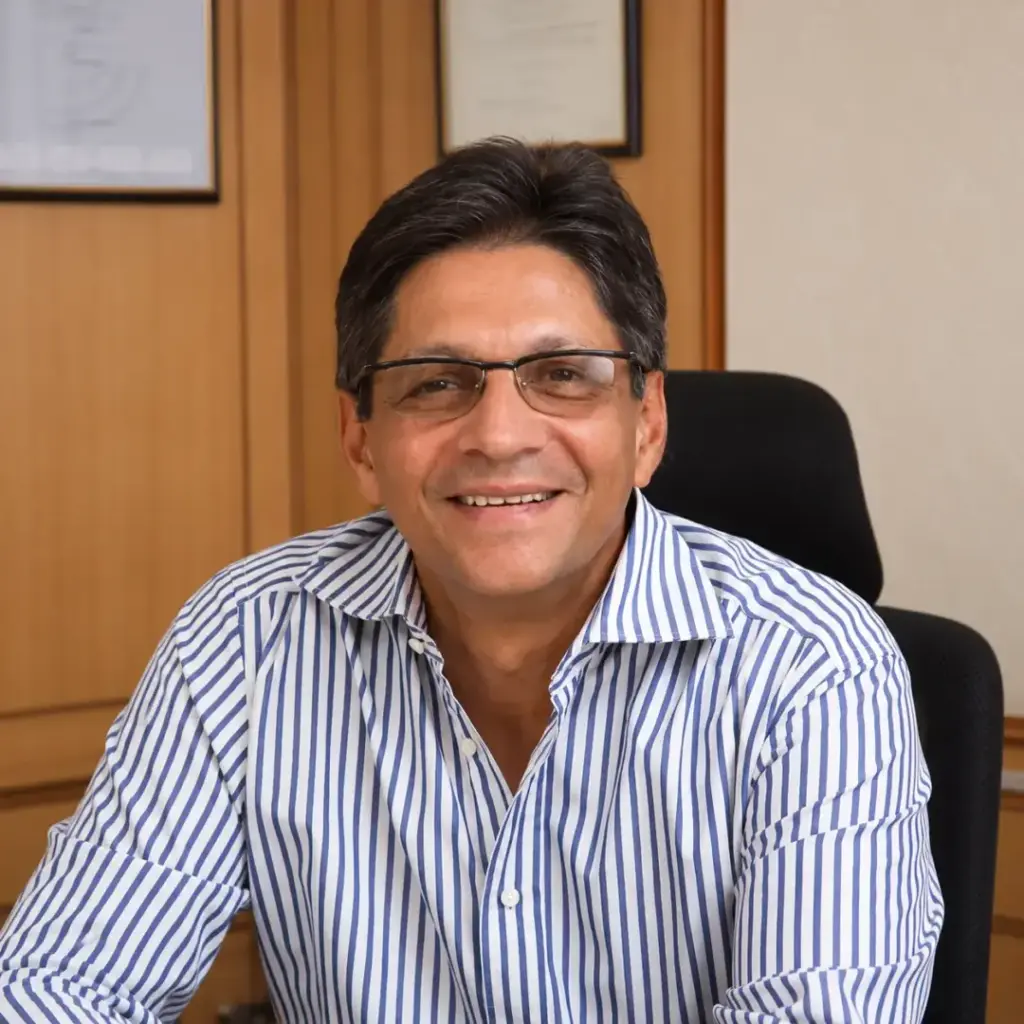
- Full Name: Parag Parikh
- Died: May 3, 2015, in a car accident in the United States, according to Business Standard
- Key Position: Founder of Parag Parikh Financial Advisory Services (PPFAS), the sponsor of PPFAS Asset Management Company (AMC)
- Flagship Enterprise: PPFAS Mutual Fund (launched in 2013)
- Estimated Wealth & Net Worth: Parikh was a private asset manager, and no reliable public estimate of his personal net worth exists. His financial legacy is tied to PPFAS AMC, which was managing about ₹1.65 lakh crore (about ₹1.65 trillion) in assets under management (AUM), according to Scripbox. Its flagship Parag Parikh Flexi Cap Fund became the first active scheme to cross ₹1 lakh crore in AUM in May 2025, according to Business Standard. AUM changes daily, so check the latest figure on the AMC’s website. (1 lakh = 100,000; 1 crore = 10 million.)
Image source: fundsindia.com
Investing is not about being smart; it is about avoiding being stupid.— Parag Parikh
History
Parikh began his financial career as a stockbroker on Dalal Street, India’s financial district, home to the Bombay Stock Exchange (BSE). After working through several Indian market cycles, he founded Parag Parikh Financial Advisory Services Private Limited (PPFAS) in 1992.
PPFAS ran Portfolio Management Services (PMS) for many years before launching its mutual fund. In 2012, it registered as an asset management company under the Securities and Exchange Board of India (SEBI) framework, and it launched PPFAS Mutual Fund in May 2013.
Parikh died in a car accident in the United States on May 3, 2015.
Achievement
He built an asset management philosophy around investor alignment. His main achievements include:
- Skin in the Game: PPFAS asks promoters, fund managers, and AMC employees to invest their own money in the schemes they manage. Regulators later required key personnel to co-invest.
- Global Diversification for Indian Retail Investors: PPFAS’s flagship fund can invest in global equities, which reduces dependence on a single country and currency.
- Investor Psychology: Through books and open seminars, he taught Indian investors about market biases, mental accounting, and irrational exuberance.
The Core Investment Philosophy: The Law of the Farm
The core philosophy rejected the idea that the stock market is a place for quick speculative gains. Parikh contrasted the “School Curriculum Approach” with the “Law of the Farm.” In the first, students cram the night before an exam. In the second, crops cannot be rushed with last-minute effort. Wealth creation requires preparing the soil, planting quality seeds, weeding out distractions, and waiting through seasonal storms.
In practice, the philosophy rested on four criteria:
- Management Quality and Corporate Governance: Avoiding promoters who treat minority shareholders poorly or allocate capital in unclear ways.
- Economic Moats and Business Simplicity: Investing mainly in businesses with clear competitive advantages, low debt, and predictable cash generation that fit within your circle of competence.
- Disciplined Valuation and Safety Margin: Not chasing popular growth stories when prices move far above fundamental earnings. The price-to-earnings (PE) ratio is one common measure, and our guide PE Ratio Meaning & Formula explains it.
- Willingness to Hold Cash: Many fund managers stay fully invested to avoid trailing benchmarks. PPFAS’s flagship fund can hold large cash positions when attractive opportunities are scarce.
The Parag Parikh Flexi Cap Fund can invest up to 35% of its corpus in international stocks, and it can also hold large cash positions, according to Business Standard. This reduces dependence on a single country and currency.
Tips: When you value a business, look at its free cash flow and not only at accounting profit.
Behavioral Finance & Seminal Books: What Retail Investors Must Learn
Before behavioral economics became widely discussed in India, Parikh wrote about how retail investors can harm their own returns. His ideas are in two books that many investors still read.
His 2005 book, Stocks to Riches: Insights on Investor Behaviour, looked at why ordinary investors often buy near market peaks and sell in panic. Parikh explained that market volatility comes not only from corporate changes but also from collective psychological overreactions. He argued that investors often earn less than the funds they own because of frequent trading and lack of temperament.
In 2009, he published Value Investing and Behavioral Finance: Insights into Indian Stock Market Realities. This work applied formal cognitive bias research to modern Indian corporate history. Parikh warned against several distinct psychological traps:
- Herd Mentality (Bandwagon Effect): Buying cyclical or speculative stocks because institutional funds and media headlines praise the rally.
- Loss Aversion: Holding on to deteriorating, low-quality stocks to avoid booking a paper loss, while cutting winning compounders early just to lock in small gains.
- Mental Accounting: Treating market gains as “house money” and taking speculative risks with profits that you would not take with your original capital.
- Sunk Cost Fallacy: Adding money to average down on damaged companies without re-checking whether the business is still viable.
Parikh argued that an investor who controls emotions can avoid many common mistakes. To compare this with a related style, read our guide What Is a Contra Fund?
The Institutional Legacy: PPFAS AMC and Mutual Funds Today
After his death in 2015, the firm continued under Neil Parag Parikh as Chairman and CEO and Rajeev Thakkar as Chief Investment Officer, and it kept its core philosophy.
Many fund houses launch dozens of thematic New Fund Offers (NFOs) to capture retail fads. PPFAS has kept a smaller product list. You can compare its schemes with other types of mutual funds in India.
The table below outlines the core schemes of PPFAS Mutual Fund:
| Scheme Name | Category | Primary Strategic Focus | Role in Retail Portfolio |
|---|---|---|---|
| Parag Parikh Flexi Cap Fund | Flexi Cap Equity | Flexi cap fund with a large-cap tilt and permitted global equity exposure | Core long-term equity compounder (5+ years horizon) |
| Parag Parikh ELSS Tax Saver Fund | ELSS (Tax Saving) | Indian equity portfolio with statutory 3-year lock-in and deep-value screening | Tax deduction under Section 80C combined with equity growth |
| Parag Parikh Conservative Hybrid Fund | Conservative Hybrid | Debt securities paired with Real Estate Investment Trusts (REITs), Infrastructure Investment Trusts (InvITs), and dividend-yielding equities | Capital preservation with inflation-beating income stability |
| Parag Parikh Liquid Fund | Debt / Liquid | High-credit-quality sovereign and money-market instruments | Emergency reserve parking and tactical equity rebalancing |
The flagship Parag Parikh Flexi Cap Fund has grown into one of the largest actively managed equity funds in India, with an AUM of roughly ₹1.45 lakh crore, according to Scripbox. Check the latest figure on the PPFAS website before you rely on it. The fund has a low portfolio turnover compared with many peers, which fits Parikh’s view that excessive churn benefits brokers more than unit holders.
Warning: Holding international equity within domestic flexi cap funds introduces foreign exchange exposure, meaning currency movements can affect portfolio returns independently of domestic stock performance.
Applying Parag Parikh’s Principles to Indian Equities: Limitations & Challenges
Parikh’s value investing principles can help limit downside, but no strategy removes the risk of loss. If you follow a strict value and behavioral discipline, you face clear trade-offs:
- Long Underperformance in Momentum Markets: In liquidity-driven bull markets, low-quality growth stocks and speculative themes can deliver large short-term returns. A value fund that holds high cash or mature cash-cow companies can lag benchmark indices over 1- to 3-year windows.
- Cash Drag: The philosophy encourages holding cash when valuations look high. In long bull runs, carrying a significant share of the portfolio in cash and arbitrage holdings can act as a performance drag compared with fully invested passive index funds.
- Regulatory Ceilings on Overseas Assets: Industry-wide limits on mutual fund overseas investments, set by the Reserve Bank of India (RBI) and SEBI, have periodically stopped the fund house from adding new international equity.
- Scale and Market Impact: As the flagship fund grew past ₹1 lakh crore (₹1 trillion), it became harder to put money into small-cap and mid-cap ideas, so holdings concentrated in large, liquid companies.
Value investing means living with discomfort during market cycles. If you abandon the approach midway through a momentum cycle, you may miss the compounding it aims to deliver.
Monetyra’s Take: Modern Indian markets are dominated by intraday options trading and algorithms. Algorithms can capture split-second inefficiencies, but long-term compounding still needs business longevity, low portfolio churn, and the discipline to hold cash when valuations stretch.
Conclusion
Parikh promoted transparency and investor alignment in Indian asset management. He combined classical value investing with a focus on cognitive biases, giving Indian retail investors a practical framework for market cycles.
His legacy continues through PPFAS AMC, his writings, and investors who measure success by patience, capital preservation, and emotional control rather than market timing.
Build lasting wealth through disciplined, value-oriented fund selection.
FAQs
He was an Indian value investor, author, and financial pioneer. He was a stockbroker, founded Parag Parikh Financial Advisory Services in 1992, and launched PPFAS Mutual Fund in 2013.
No reliable public estimate of Parag Parikh’s personal net worth exists. His financial legacy is tied to PPFAS AMC, which was managing about ₹1.65 lakh crore (about ₹1.65 trillion) in assets under management (AUM), according to Scripbox. AUM changes daily, so check the latest figure on the AMC’s website.
The “Law of the Farm” is an analogy, also known from Stephen Covey’s book The 7 Habits of Highly Effective People, that PPFAS uses as its core belief. It says that wealth creation needs a natural growing season. Just as a farmer cannot rush the harvest by cramming effort at the end, an equity investor cannot force rapid gains and must allow businesses time to compound earnings.
He wrote two books: Stocks to Riches: Insights on Investor Behaviour and Value Investing and Behavioral Finance: Insights into Indian Stock Market Realities.
After his death in 2015, his son Neil Parag Parikh became Chairman and Chief Executive Officer (CEO) of PPFAS Mutual Fund. Rajeev Thakkar is Director and Chief Investment Officer (CIO).
Disclaimer: This article was written with the help of AI and reviewed by the Monetyra editorial team. It is for educational purposes only and should not be considered financial advice. Past performance does not guarantee future results. Trading and investing in financial instruments involve significant risk of loss and are not suitable for all investors. Please consult a licensed financial advisor before making any investment decisions.
In India, mutual funds are subject to market risks, and scheme performance is governed under SEBI mutual fund regulations. Readers are advised to verify the regulatory status of their fund house and carefully review all offer documents before investing.