Who Is Sanjay Bakshi? Portfolio, Strategy, and Net Worth
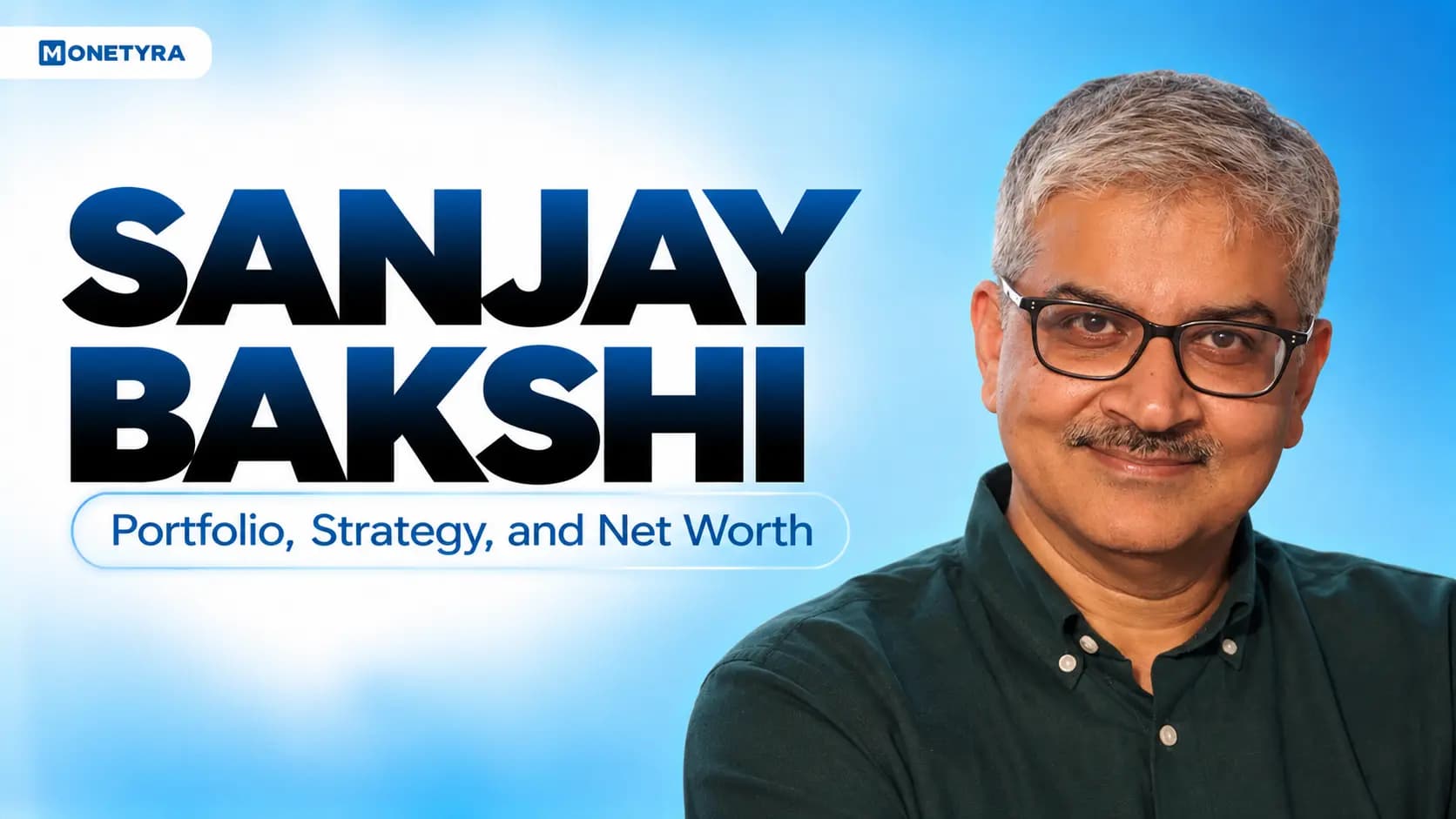
Prof. Sanjay Bakshi is a well-known value investing educator in India. Many investors know him as the “Fundoo Professor.” He combines academic theory with real-world capital allocation.
Instead of chasing short-term price swings, he teaches disciplined value compounding based on Charlie Munger’s multidisciplinary mental models and Warren Buffett’s search for durable economic moats. If you invest in a noisy Indian stock market, his teachings can help you think about preserving capital and compounding over decades.
Quick Takeaways
- Prof. Sanjay Bakshi is a well-known value investing educator. He taught at MDI Gurgaon for two decades and now runs ValueQuest Capital.
- His strategy emphasizes economic moats, strong corporate governance, and multidisciplinary mental models over cheap statistical bargains.
- His public track record is widely studied, but copying institutional portfolios can expose you to liquidity, sizing, and timing risks.
Who Is Sanjay Bakshi?

- Current position: Founder and Managing Partner of ValueQuest Capital Limited Liability Partnership (LLP), a SEBI-registered Investment Adviser (INA100002032) and Category III Alternative Investment Fund (AIF) manager.
- Academic positions: Distinguished Adjunct Professor of Finance at FLAME University; previously Adjunct Professor at Management Development Institute (MDI), Gurgaon (2001–2021).
- Investment edge: Behavioral finance, qualitative business evaluation, and capital allocation analysis.
- Net worth: Not publicly disclosed. Trackers that add up exchange filings show only holdings above disclosure thresholds, not his private assets or the assets of ValueQuest’s clients, so treat any figure as a rough estimate.
- Core writing platform: Fundoo Professor
Image Source: sanjaybakshi.com
Investing is not about buying things on the cheap; it is about buying things that will become significantly more valuable over time. — Sanjay Bakshi
History
Prof. Bakshi earned a B.Com. (Hons) from the University of Delhi and an M.Sc. in Economics from the London School of Economics (LSE). He is also a Fellow member of the Institute of Chartered Accountants of India (ICAI).
In 2001, he began teaching his flagship course, “Behavioral Finance and Business Valuation,” at MDI Gurgaon. MDI students elected him Best Faculty in several batches. His open memos, case studies, and public blog, Fundoo Professor, helped many retail investors understand balance sheet analysis.
Achievement
Beyond academia, Bakshi applies his frameworks at ValueQuest Capital LLP. The firm advises family offices and an offshore fund and manages a Category III AIF under regulations set by the Securities and Exchange Board of India (SEBI).
His main contribution is introducing many Indian investors to the “multidisciplinary mental models” framework made popular by Charlie Munger. He argues that deep qualitative analysis of competitive advantages can help avoid permanent losses, compared with relying only on statistical value screens. Past performance does not guarantee future results.
The Sanjay Bakshi Investment Strategy: Moats and Mental Models
The Sanjay Bakshi investment strategy centers on owning high-quality businesses run by ethical managers and letting compounding do the work. In his early years, Bakshi practiced traditional Ben Graham-style “cigar-butt” investing, buying very cheap companies trading below liquidation value. Over time, influenced by Philip Fisher and Charlie Munger, he moved toward high-quality compounding businesses.
The framework below is a Monetyra summary of how value investors in his tradition evaluate investments. It is not a list published by Bakshi:
| Evaluation Dimension | Core Assessment Criteria | What Value Investors Look For | Common Red Flags |
|---|---|---|---|
| Economic Moat | Pricing power, barriers to entry, network effects, and switching costs. | High and sustained Return on Invested Capital (ROIC) across multiple cycles. | Commoditized products, intense capital reinvestment with low returns. |
| Management Quality | Integrity, operating competence, and shareholder orientation. | Prudent capital allocation, candid shareholder letters, high insider ownership. | Related-party transactions, aggressive accounting, unhedged foreign debt. |
| Valuation & Margin of Safety | Favorable entry price relative to sustainable long-term cash generation. | Reasonable multiple paid for high-reinvestment runway businesses. | Paying extreme speculative multiples assuming uninterrupted growth. |
A central idea in Bakshi’s teaching is building a latticework of mental models. Instead of viewing a business through financial accounting alone, he also looks at it through psychology, evolutionary biology, engineering redundancy, and microeconomics.
- Inversion thinking: Instead of asking how a business can succeed, he asks what could kill it, and he discards businesses prone to obsolescence.
- The “too-hard” pile: If evaluating a company needs forecasts of technological disruption or commodity cycles, he steps aside.
- Focus on reinvestment rate: A business that earns a 25% return on capital and can reinvest 80% of its earnings at high rates can outgrow a static dividend payer by a wide margin.
Tips: When you research a company, check how it defends its margins in an industry downturn, not only how much revenue it earns in a boom.
Inside the Sanjay Bakshi Portfolio and ValueQuest Capital
Tracking the Sanjay Bakshi portfolio requires understanding how Indian disclosures work. Listed companies must name public shareholders who hold more than 1% in their quarterly shareholding patterns, which they file with the Bombay Stock Exchange (BSE) and other exchanges. Under SEBI’s takeover rules, investors themselves must disclose acquisitions above 5%.
Consequently, public trackers show only a partial view of his holdings.
The Dangers of Portfolio Cloning
Many retail investors try to copy his holdings as soon as public filings appear. This strategy carries structural risks:
- Information lag: Shareholding patterns are filed quarterly, within 21 days of quarter-end, so a disclosed position can be months old.
- Inability to size positions: For example, a fund may size a high-risk bet at 2% of its portfolio, while a retail cloner might put 25% of personal savings in the same stock without knowing the thesis.
- Behavioral mismatch: When a stock drops 35% in a cyclical correction, the original manager may average down based on balance-sheet conviction. A cloner without that conviction may panic and sell at the bottom.
Warning: If you copy an institutional investor’s public stock picks without understanding the business valuation, you may panic-sell during a routine market drawdown.
The Fundoo Professor Legacy: Behavioral Finance in India
Through his long-running blog, Fundoo Professor, Bakshi explained behavioral finance for Indian retail investors. Academics often treat investors as perfectly rational profit-maximizers. Bakshi highlighted psychological traps that can lead to large investment losses:
- Commitment and consistency bias: The psychological tendency of investors to defend an underperforming stock because they publicly praised it to peers or on social media.
- Envy and fear of missing out (FOMO): Watching peers get rich quickly in speculative momentum names, which can push investors to abandon their discipline and join the crowd.
- Loss aversion: The emotional pain of taking a 15% loss, leading an investor to hold a deteriorating business all the way down to zero.
For Indian retail investors, staying inside a defined circle of competence and being patient can help guard against market euphoria.
Monetyra’s Take: Bakshi’s main gift to Indian investors is not a list of stock tips but a way of thinking. If you are tempted by intraday trading and derivatives, his lectures are a useful reality check. Finding sustainable economic moats in fast-growing Indian mid-caps takes serious analytical work. Unless you have the time and accounting skill to dissect annual reports and interview management, you may prefer broad index funds for most of your savings and a small, focused allocation for individual value stocks.
Conclusion
Prof. Bakshi’s career shows the value of intellectual honesty, careful valuation, and patient compounding. He combined ideas from Benjamin Graham, Charlie Munger, and Philip Fisher in the Indian context.
Success in equities rarely comes from predicting headlines. It comes from understanding the durable economic engines behind businesses.
Discover how India’s most disciplined investors navigate market cycles.
FAQs
He is an Indian value investor, finance educator, and Managing Partner at ValueQuest Capital LLP. He taught Behavioral Finance and Business Valuation at MDI Gurgaon for two decades and publishes educational investment insights on his blog, Fundoo Professor.
His net worth is not publicly disclosed. Trackers that add up exchange filings show only holdings above disclosure thresholds, so they do not show his private assets or the assets that ValueQuest Capital advises. Treat any figure as a rough estimate.
Fundoo Professor is the educational blog founded by Prof. Sanjay Bakshi. On the platform, he publishes memos, lecture notes, case studies, and reflections on behavioral biases, capital allocation, and Charlie Munger’s multidisciplinary mental models for the broader investing public.
Bakshi follows a quality-focused value investing strategy. He prioritizes companies with durable competitive advantages (moats), high returns on invested capital, clean corporate governance, and disciplined capital allocation, and he holds them for long horizons.
Blindly cloning public filings is risky because shareholding patterns are filed quarterly, so positions can be months old. Retail investors cannot see an institutional fund’s entry cost, position sizing, hedging, or exit thesis, so cloning can lead to behavioral errors in downturns.
Disclaimer: This article was written with the help of AI and reviewed by the Monetyra editorial team. It is for educational purposes only and should not be considered financial advice or an endorsement of any specific security or fund. Past performance does not guarantee future results. Equity investments are subject to market risks, and capital loss is possible. Portfolio disclosures mentioned are based on historical public regulatory filings and do not represent active investment recommendations. Always consult a SEBI-registered investment advisor before making financial decisions.