Bid Price and Ask Price: Simple Terms Traders Should Know
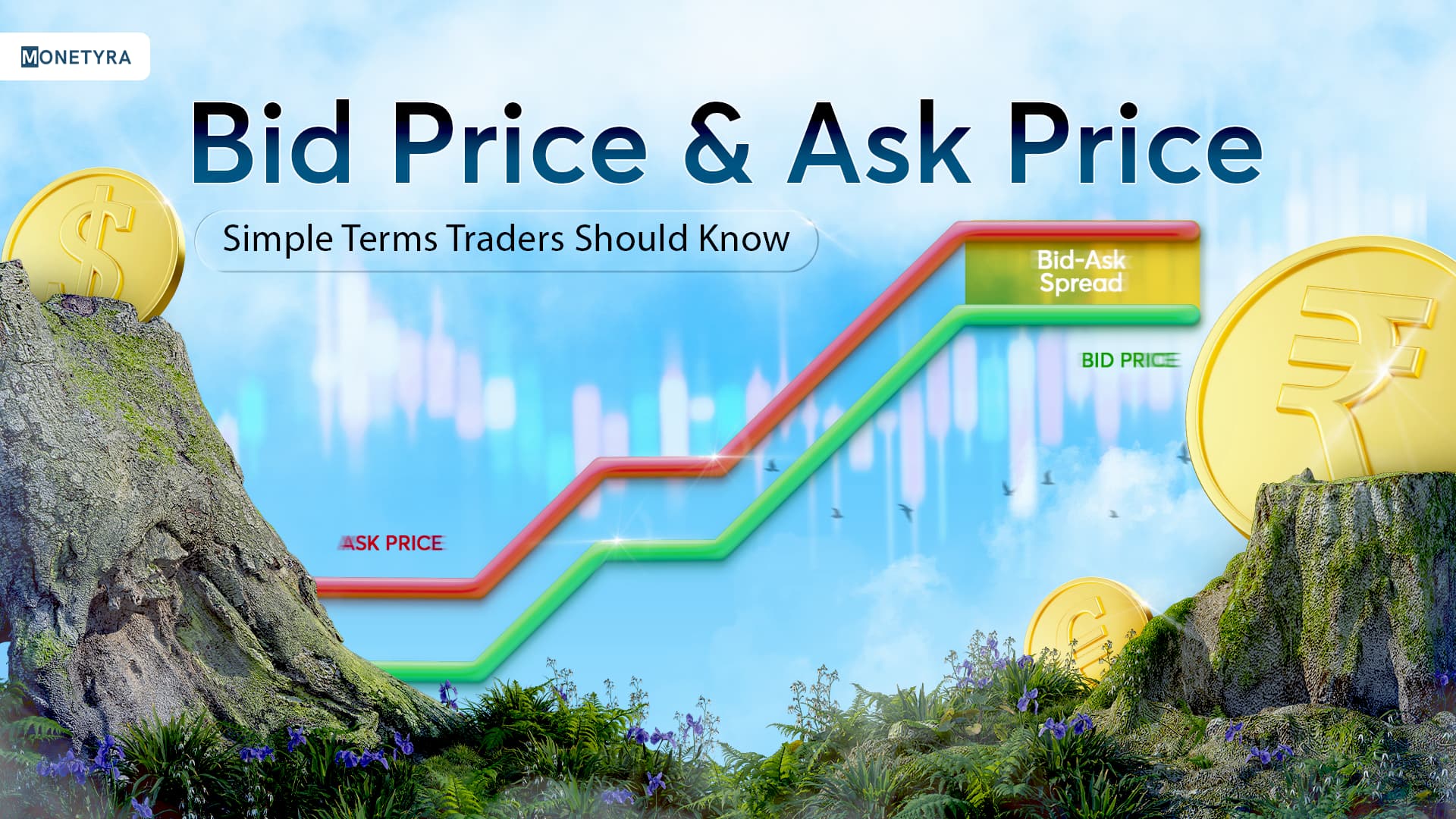
For traders entering the global currency markets, understanding the mechanics of a trade is the first step toward consistent execution. In the fast-paced world of currency pairs, the bid price and ask price serve as the pulse of every transaction. Whether you are trading major pairs (EUR/USD, USD/JPY) or minors (EUR/AUD, INR/EUR), these two prices represent the real-time negotiation between global liquidity providers and retail participants.
This article covers definitions of bid and ask price, working mechanism, how these prices affect your trades, and what factors cause the spread to widen or narrow. Understanding how this “two-way” quote functions is essential, as it directly determines your immediate entry costs and the potential profitability of your currency positions.
What Is Bid Price and Ask Price?
In any liquid market, every security has two prices quoted at any given time. These quotes are called the bid and ask. The bid price is linked to buyers and reflects market demand, while the ask price is linked to sellers and represents market supply.
Bid Price Meaning
The bid price in forex trading is the maximum price that the market or your broker is willing to buy the base currency from you. This is the price you would likely receive if you sell immediately at market rates. For example, if you are holding USD and want to convert it back to INR, you would look at the bid price.
Ask Price Meaning
The ask price, often referred to as the “offer price,” is the minimum price at which the market is willing to sell the base currency at this rate. This is the price you must pay to a seller to acquire it instantly. For example, if you want to exchange INR for USD, you’ll buy USD at the ask price.
Example of Bid and Ask
Imagine you are monitoring the USD/EUR currency pair on your trading platform. You see a quote displayed as follows:

If you have base currency (EUR) on hand, this means the market will pay you 1.16376 USD for every 1 EUR you sell, but you must pay 1.16381 USD to buy back every 1 EUR.
Tip: In a standard market, the ask price is always higher than the bid price.
The Role of Market Makers in Setting Prices
In the forex market, prices aren’t set by a single exchange but are managed by key participants who ensure the market remains functional 24 hours a day. These entities play a vital role in maintaining the bid price and ask price levels you see on your trading terminal.
Who Are Market Makers?
Market makers are large financial institutions, such as international banks or specialized brokerage firms, that stand ready to buy or sell a currency pair at any given time. They “make a market” by providing the necessary liquidity that allows retail traders to execute orders instantly without waiting for another individual trader to match their specific price.
For the Indian market, major banks acting under SEBI and RBI guidelines often serve this role for pairs like USD/INR, ensuring that there is always a counterparty available for your trades.
How They Facilitate the Bid and Ask
Market makers act as the bridge between supply and demand by continuously quoting two-way prices. Here is how they facilitate the process:
Create Liquidity
They provide a constant stream of bid and ask prices, ensuring you can enter or exit a position even during quiet market hours.
Set the Spread
The market maker buys at the bid price and sells at the ask price. The difference between these two—the spread—is their primary compensation for taking on the risk of holding the currency.
Manage Risk
When a market maker takes the opposite side of your trade, they take on price risk. To manage this, they constantly adjust the bid vs ask quotes based on global news, order flow, and current volatility.
Ensure Efficiency
By competing with other market makers, they help keep the bid-ask spread narrow for major pairs, which reduces the transaction costs for retail investors.
Therefore, without market makers, the gap between the bid and ask would be significantly wider, making it much harder and more expensive for you to execute your trading strategy.
How Bid and Ask Prices Work in Trading
The forex market functions as a massive matching engine. When you place an order, your broker looks at the order book, which is a real-time list of all pending buy and sell instructions from liquidity providers. The bid vs ask dynamic ensures trades only occur when a buyer and seller agree on a price. If you place a buy order at the current bid, your order will sit in a queue until a seller is willing to lower their ask to match you.
Impact of Bid and Ask on Order Execution
The type of order you choose determines whether you prioritize speed or price relative to the bid and ask price. Below is the explanation of how bid and ask affect each order execution from market order, limit order, to stop-loss order:
Market Order
As a market order prioritizes speed, a buy order is executed immediately at the best available ask price, while a market sell hits the available bid price. In volatile markets, the price you get might shift slightly during the millisecond it takes to execute, known as price slippage.
Limit Order
A limit order allows you to specify the price you want. You might set a buy limit order below the current ask price. Your trade will only execute if the market’s ask drops to your specified level, ensuring you don’t overpay.
Stop-Loss Order
A stop-loss is a vital risk management tool. A stop-loss sell order remains inactive until the currency hits a trigger price. Once triggered, it becomes a market order that hits the current bid price to exit your position quickly and prevent further losses.
Why Bid-Ask Spread Changed
The spread is dynamic and fluctuates based on market conditions, directly impacting your trading costs. It widens during periods of low liquidity (like holidays), high volatility, or right before major economic data releases, as liquidity providers adjust to mitigate risk. This makes trades more expensive.
Conversely, the spread narrows during high-volume periods (such as overlapping market sessions) and times of market stability. A narrow spread reflects a healthy, highly liquid market, offering traders lower transaction costs and more favorable entry points.
Conclusion
Understanding the bid price and ask price is fundamental for any forex trader looking to manage costs effectively. While the last price tells you where the market was, the bid and ask tell you where you can actually trade right now. By monitoring these prices and the resulting spread, you can better time your entries and exits to protect your overall profitability.
After understanding the bid price and ask price, we suggested that you learn more about other forex terms to understand the market clearly. Explore more basic terms and guides in our Trading Terms article to be prepared for the real market.
Disclaimer
Forex trading involves significant risk. This content is for educational purposes and is not financial advice. Real-time fluctuations in the bid price and ask price create a spread that acts as a direct transaction cost. However, past pricing is not a guarantee of future results. Always consult a SEBI-registered advisor before trading.
FAQs
The ask price is the price you pay when buying (the market sells to you), while the bid price refers to the price you get when selling (the market buys from you).
The difference between the two is the spread, which covers the broker’s costs and risks for facilitating the trade. If the bid were higher, an immediate trade would occur until the gap was restored.
In a standard liquid market, this is almost impossible as the exchange would instantly match these orders. It usually only happens in highly stressed or broken markets.
The difference between the bid and ask price in forex is called spread, which is typically measured in pips. Narrow spreads facilitate easier trade execution, while wider spreads reflect a larger valuation gap between buyers and sellers.
Wide spreads are caused by low liquidity (fewer traders), extreme market volatility (rapid price swing), or uncertainty surrounding major economic news events.