How to Avoid Margin Call: Risk Management Guide
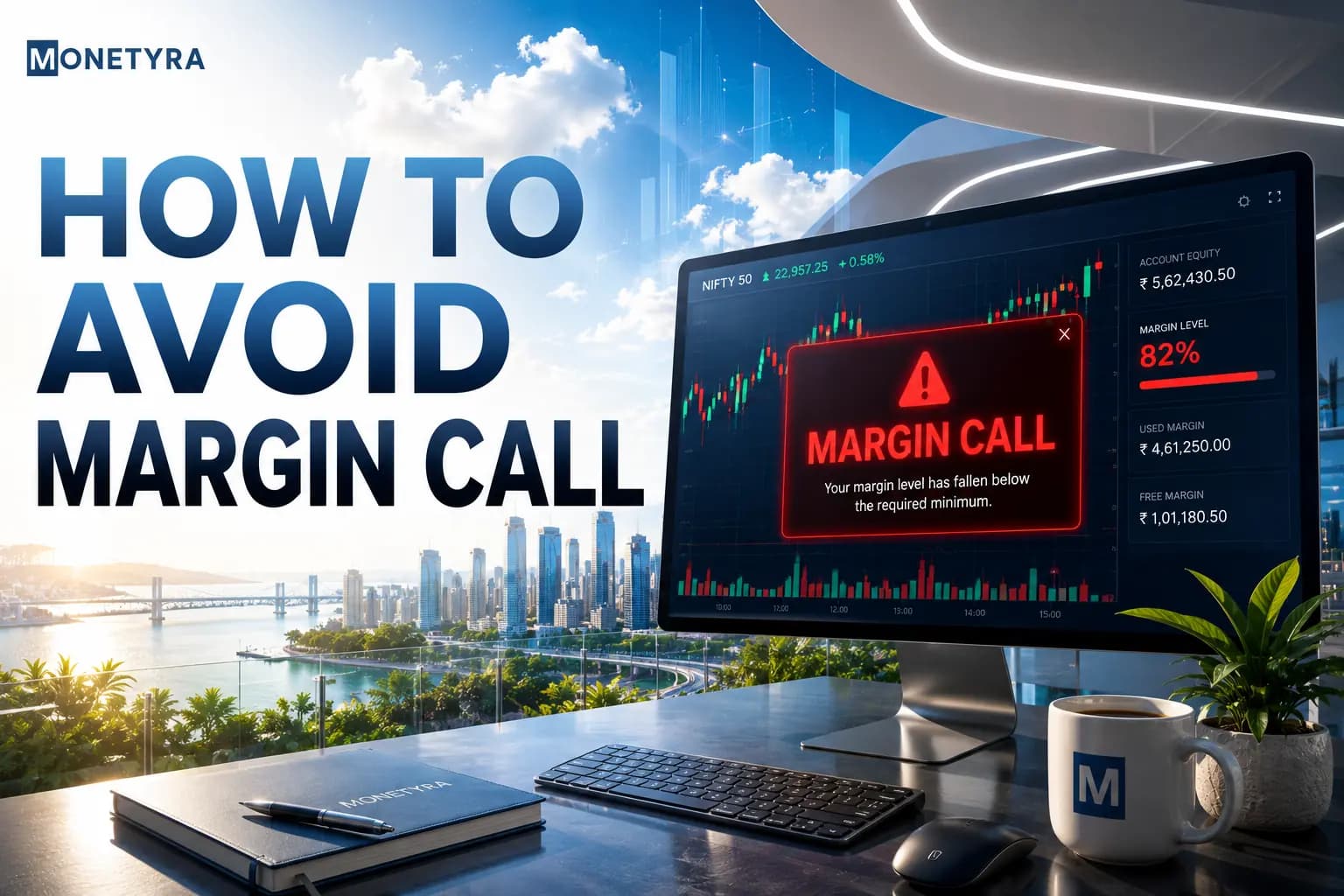
Opening a leveraged position feels great when the market moves in your favor, but a sudden price spike against your trade can quickly erode your margin. A margin call occurs when account equity drops below your broker’s maintenance margin threshold, requiring an immediate cash injection or forced position liquidation to prevent negative balances. Understanding how leverage mechanics work, knowing how to avoid margin call warnings, and implementing strict trade controls allows you to protect your trading capital before account warnings occur.
Quick Takeaways
- A margin call occurs when your account equity drops below the maintenance margin requirement set by your broker.
- Enforcing strict position sizing and placing hard stop-loss orders on every trade are two of the most effective ways to prevent forced liquidation.
- Market gap risk, overnight leverage, and slippage mean leverage can rapidly amplify losses during high volatility.
What Is A Margin Call?
A margin call is a formal notification from your broker demanding that you deposit additional funds or clear open positions because your account equity has fallen below the minimum maintenance margin threshold.
When you trade on margin, you are effectively using leverage—borrowing capital from your broker to open larger positions than your existing cash balance would allow. However, leverage cuts both ways. While it amplifies potential gains on successful setups, it accelerates account drawdowns when the market moves against you.
Warning: Relying on intraday profits to fund margin buffers without a cash reserve opens your account to sudden square-offs during unexpected market spikes.
Margin Call Formula
Understanding the underlying mathematics of leverage allows you to track your account health before a broker warning is issued. Brokers evaluate account safety in real time using the margin call formula:
Margin Level (%) = (Account Equity/Used Margin)x100
Where:
- Account Equity = Cash Balance + Unrealized Profits – Unrealized Losses.
- Used Margin = Total capital locked across all open trades.
How to Avoid Margin Call: 5 Essential Strategies
Learning how to avoid margin call notifications requires combining proactive risk parameters with strict capital management before placing an order.
1. Use Strict Stop-Loss Orders
Placing a stop-loss on every entry guarantees that bad trades exit before drawdowns consume your maintenance margin. Hard stop-loss orders automatically close losing trades at a predetermined price, removing emotional hesitation and preventing unpredictable market spikes from wiping out your free margin.
2. Calculate Proper Position Sizing
Limit risk to 1%–2% of total capital per trade, maintaining small position sizes relative to your full account balance. Over-leveraging a single position dramatically increases liquidation risk; keeping trade sizes disciplined ensures that a sequence of normal losses won’t trigger broker equity thresholds.
3. Maintain a Dedicated Cash Cushion
Keep at least 30%–50% of your total equity as unallocated free margin to absorb sharp price moves. Holding excess unutilized cash acts as a buffer against market slippage, spread expansion, and overnight gapping, keeping your account far above forced liquidation levels.
4. De-leverage High-Volatility Assets
Reduce applied leverage when trading volatile earnings announcements, economic data releases, or fast-moving currency pairs. High-beta assets can move against your position in seconds, so lowering your leverage ratio gives your trades wider breathing room without threatening your capital safety limits.
5. Monitor Active Open Positions
Regularly audit your portfolio exposures during active market hours to identify failing trades early. Actively tracking market conditions, margin utilization percentages, and correlated assets allows you to adjust exposure or manually exit decaying setups long before warning notifications trigger.
Tip: Never enter a trade without pre-calculating the exact position size relative to your stop-loss distance.
Margin Call vs. Stop-Out Level
Brokers enforce two distinct protective triggers: the margin call warning and the stop-out level. Knowing how these two mechanisms differ helps you respond before your positions are forcibly closed.
| Feature | Margin Call | Stop-Out Level |
|---|---|---|
| Trigger Condition | Account Equity falls to maintenance threshold (e.g., 100%) | Account Equity falls below critical liquidation threshold (e.g., 50%) |
| Broker Action | Sends alert demanding extra cash or voluntary trade closure | Automatically liquidates open trades to protect balance |
| Account Impact | Warning state; trades remain active temporarily | Immediate realized losses and position closure |
| Primary Goal | Warns the trader to take corrective action | Prevents negative account balances and broker liability |
SEBI Peak Margin Norms and Indian Broker Auto Square-Off Rules
Trading in India requires adherence to specific framework guidelines established by regulators and risk management system (RMS) operations.
SEBI Peak Margin Framework
The Securities and Exchange Board of India (SEBI) mandates peak margin rules across stock and derivative exchanges. Brokers take random snapshots of client positions during trading sessions to verify that mandatory margin requirements are held continuously. Shortfalls detected during these snapshots trigger upfront margin penalty charges, preventing brokers from offering excessive intraday leverage.
RMS Auto Square-Off Timings
Indian brokerage platforms enforce automated Risk Management System (RMS) square-off procedures:
- Intraday Liquidation Windows: Unclosed MIS (Margin Intraday Square-off) positions are automatically closed around 3:15 PM to 3:20 PM IST.
- MTM Shortfall Triggers: If Mark-to-Market (MTM) losses exceed pre-set risk thresholds (often 70%–80% of available capital), automated algorithms square off positions immediately to limit systemic exposure.
Conclusion
Preventing a margin call depends on disciplined trade execution rather than reacting to emergency margin notices. By enforcing strict position sizing, keeping unallocated cash reserves, and honoring hard stop-loss limits, you protect your trading capital against market volatility.
Build your baseline knowledge of margin mechanics and execution rules with our comprehensive academy guides.
Disclaimer: This article was written with the help of AI and reviewed by the Monetyra editorial team. It is for educational purposes only and should not be considered financial advice. Trading and investing in financial instruments involve significant risk of loss and are not suitable for all investors, and past performance of any strategy does not guarantee future results. Please consult a licensed financial advisor before making any investment or trading decision.
In India, equity, derivative, and currency trading are overseen by SEBI and the Reserve Bank of India (RBI). Readers are advised to verify the regulatory status of their broker and ensure compliance with applicable Indian laws, including the Foreign Exchange Management Act (FEMA), before trading.
FAQs
A margin call is triggered when trading losses reduce your account equity below the minimum maintenance margin required by your broker to hold open positions.
You can satisfy or stop a margin call by depositing additional funds into your account, transferring unencumbered eligible securities, or manually closing open positions to release locked margin.
A margin call is an initial warning that account equity has hit a critical low, whereas a stop-out is the automatic closure of open trades by the broker to prevent negative balances.
You typically keep a free margin buffer of at least 30% to 50% above mandatory margin requirements to absorb unexpected market gaps and price slippage.
Yes, placing a hard stop-loss helps prevent margin calls by closing losing trades at predetermined limits before drawdowns reach maintenance margin levels.