What Is FOMO in Trading?
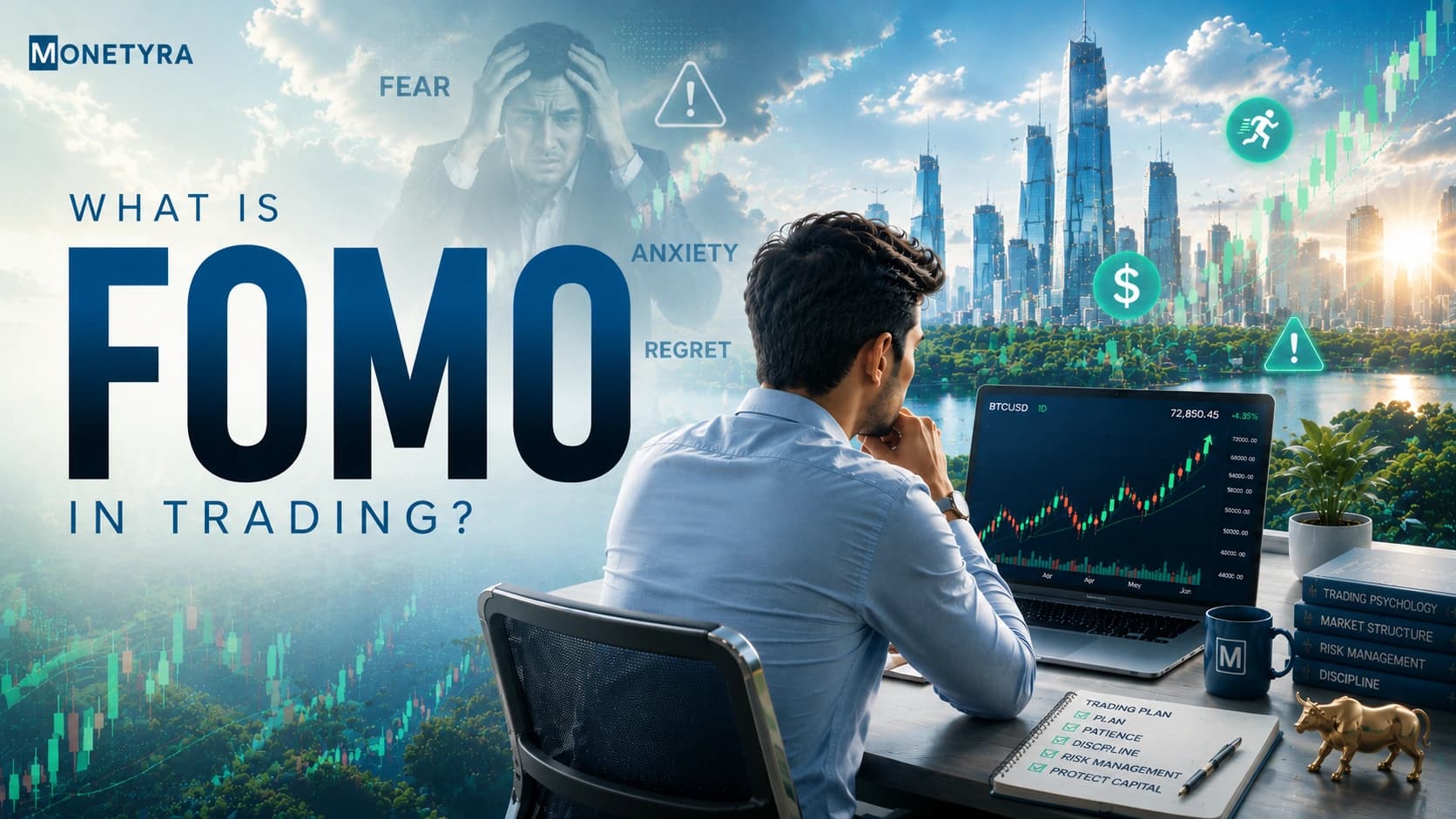
Have you ever seen a currency pair like EUR/USD suddenly shoot up and felt a powerful urge to open a trade right away before missing out?
You end up buying at the peak, only for the price to drop immediately. To understand what is fomo in trading (Fear of Missing Out), it’s that nervous feeling you get when you see others making quick money while you sit on the sidelines. It is a common emotional trap that almost every trader falls into at some point.
Quick Takeaways
- What is fomo in trading: An acronym for “Fear of Missing Out,” describing the emotional impulse to enter a market move late without proper risk planning.
- Emotional market entries often lead to buying at local highs or selling at local lows, increasing account drawdown.
- Implementing rule-based entry triggers, position sizing, and mandatory stop-loss orders helps neutralize psychological noise.
What Is FOMO in Trading?
What is FOMO in trading refers to the emotional urge—driven by the Fear of Missing Out—that compels a trader to enter a position impulsively without following a predefined plan or verifying risk rules.
The term stands for Fear of Missing Out. In financial markets, it manifests when you see an asset price rapidly rising or falling and experience anxiety that you are missing a profitable opportunity. Instead of waiting for a clear setup or a favorable risk-to-reward ratio, the emotional impulse overrides discipline, causing you to chase the price.
Understanding what is fomo in trading starts with recognizing that markets move continuously. When emotion takes over, traders view a single price candle as a unique, unmissable chance, leading them to abandon their trading strategy.
What Causes FOMO in Trading?
Emotional trading rarely happens in a vacuum. It is typically triggered by a combination of market environment, cognitive biases, and external social cues.
Common Triggers of FOMO Trading
- Sharp Price Volatility: Sudden, large green or red candles on short timeframes create immediate urgency, convincing traders that a massive move is leaving them behind.
- Winning Streaks and Overconfidence: After a series of profitable trades, a trader may feel invincible and assume every entry will succeed, ignoring normal entry criteria.
- Recent Loss Recovery: Experiencing a bad trade often creates a desire to make back lost capital instantly, leading to impulsive late entries on moving assets.
- Social Media and Chatter: Seeing screenshots of large P&L statements in trading communities or social media channels fuels comparison and impatience.
Symptoms and Consequences of FOMO Trading
Recognizing the behavioral signs of fomo trading is the first step toward building a disciplined process.
When fomo trading takes control, a trader typically exhibits several recognizable behaviors:
- Chasing Extended Price Moves: Buying long after a breakout has already extended far above key support or moving averages.
- Ignoring Stop-Loss Placement: Opening positions without establishing a logical risk limit because the focus is entirely on potential reward.
- Increasing Position Sizes Impulsively: Sizing up beyond predefined portfolio risk limits to maximize gains from a fast-moving asset.
- Deviating From the Trading Plan: Entering setups that do not match the criteria written in your strategy guide.
The financial consequence of these actions is almost always poor execution quality. Entering a move late means buying near resistance or selling near support, leaving little room for a favorable risk-reward ratio. When the market inevitably consolidates or retraces, the late entry is subjected to immediate drawdown.
FOMO vs. Overtrading: Understanding the Difference
While emotional trading patterns often overlap, it is helpful to distinguish between different behavioral pitfalls.
| Feature | FOMO Trading | Overtrading |
|---|---|---|
| Primary Trigger | Sudden, rapid price moves or external hype | Boredom, impatience, or frustration |
| Entry Timing | Late, chasing extended market moves | Excessive frequency, taking low-quality setups |
| Risk Focus | Fear of missing out on potential profits | High total volume, eroding capital through fees |
| Primary Fix | Predefined entry rules and patience | Strict daily trade limits and session caps |
Tip: Knowing the difference between chasing a sudden market move and taking too many low-quality trades helps you select the right risk control for your routine.
How to Avoid FOMO in Trading: Practical Strategies
Overcoming psychological impulses requires structural habits that limit emotional decision-making during active market hours.
- Establish Rule-Based Entry Criteria: Define exact technical or fundamental conditions required before placing an order. If a setup does not meet all criteria, do not enter.
- Use Pre-Set Limit Orders: Instead of chasing market orders during rapid moves, place limit orders at key support or resistance levels where risk is defined.
- Calculate Position Size First: Determine your exact position sizing in trading based on account capital and stop-loss distance before opening a position. For example, if your account is ₹1,00,000 and you risk 1% per trade, your maximum loss per position should not exceed ₹1,000 regardless of how attractive the setup looks.
- Maintain a Detailed Log: Documenting every trade in a trading journal format creates accountability and highlights emotional entry patterns over time.
- Accept That Missed Opportunities Are Normal: The market offers endless opportunities every week. Missing a single move does not impact a long-term statistical edge.
Warning: Entering a fast-moving market without a predefined stop-loss exposes your account to sudden slippage and unexpected loss.
Managing Emotional Trading in Indian Markets
Indian retail traders navigating volatile sessions on the National Stock Exchange (NSE) or Bombay Stock Exchange (BSE) face unique psychological high-pressure scenarios.
Market-Specific Scenarios:
- Circuit-Limit Stocks: Stocks locked in upper circuits often tempt retail investors to place market orders, risking execution at overextended valuation levels once the circuit opens.
- Index Options Volatility: Fast moves in Nifty 50 or Bank Nifty options premiums during momentum swings often cause traders to buy option contracts at inflated implied volatility levels.
Using automated risk rules—such as hard stop-loss orders in your broker terminal and pre-session planning—helps protect capital against extreme intraday fluctuations.
Conclusion
Understanding what is fomo in trading is essential for developing long-term market consistency. While the urge to chase rapid price moves is a natural human reaction, successful trading relies on process, risk controls, and discipline rather than emotion. By building strict entry rules, maintaining position sizing limits, and reviewing performance regularly, you transform random market participation into a systematic approach.
Expand your trading knowledge and master core psychological and technical terms with Monetyra.
Disclaimer: This article was written with the help of AI and reviewed by the Monetyra editorial team. It is for educational purposes only and should not be considered financial advice. Trading and investing in financial instruments involve significant risk of loss and are not suitable for all investors, and past performance of any strategy does not guarantee future results. Please consult a licensed financial advisor before making any investment or trading decision.
In India, financial market activities are overseen by the Securities and Exchange Board of India (SEBI) and the Reserve Bank of India (RBI). Readers are advised to verify the regulatory status of their intermediary and ensure compliance with applicable Indian laws before investing.
FAQs
FOMO stands for Fear of Missing Out. In trading, it describes the emotional urge to enter a trade impulsively when seeing a rapid price move, often leading to late entries without proper risk management.
FOMO is usually triggered by sharp price spikes on charts, seeing others post winning trades on social media, recovering from a recent loss, or experiencing overconfidence after a winning streak.
You can reduce FOMO by following a written trading plan, setting limit orders at key structural levels, calculating position size before entering, and maintaining a trade log to evaluate execution discipline.
Yes, FOMO is generally detrimental because it causes traders to abandon their risk parameters, buy at market tops or sell at bottoms, and take unnecessary losses due to emotional execution.
FOMO is specifically the fear-driven urge to jump into a fast-moving market late, whereas overtrading refers to executing excessive trades due to impatience, boredom, or attempts to recover losses.
Beginners can manage FOMO by trading smaller position sizes, using hard stop-loss orders, focusing on execution quality rather than monetary outcomes, and accepting that market opportunities recur constantly.