Demat Account Opening Charges: Fees, AMC & BSDA Rules
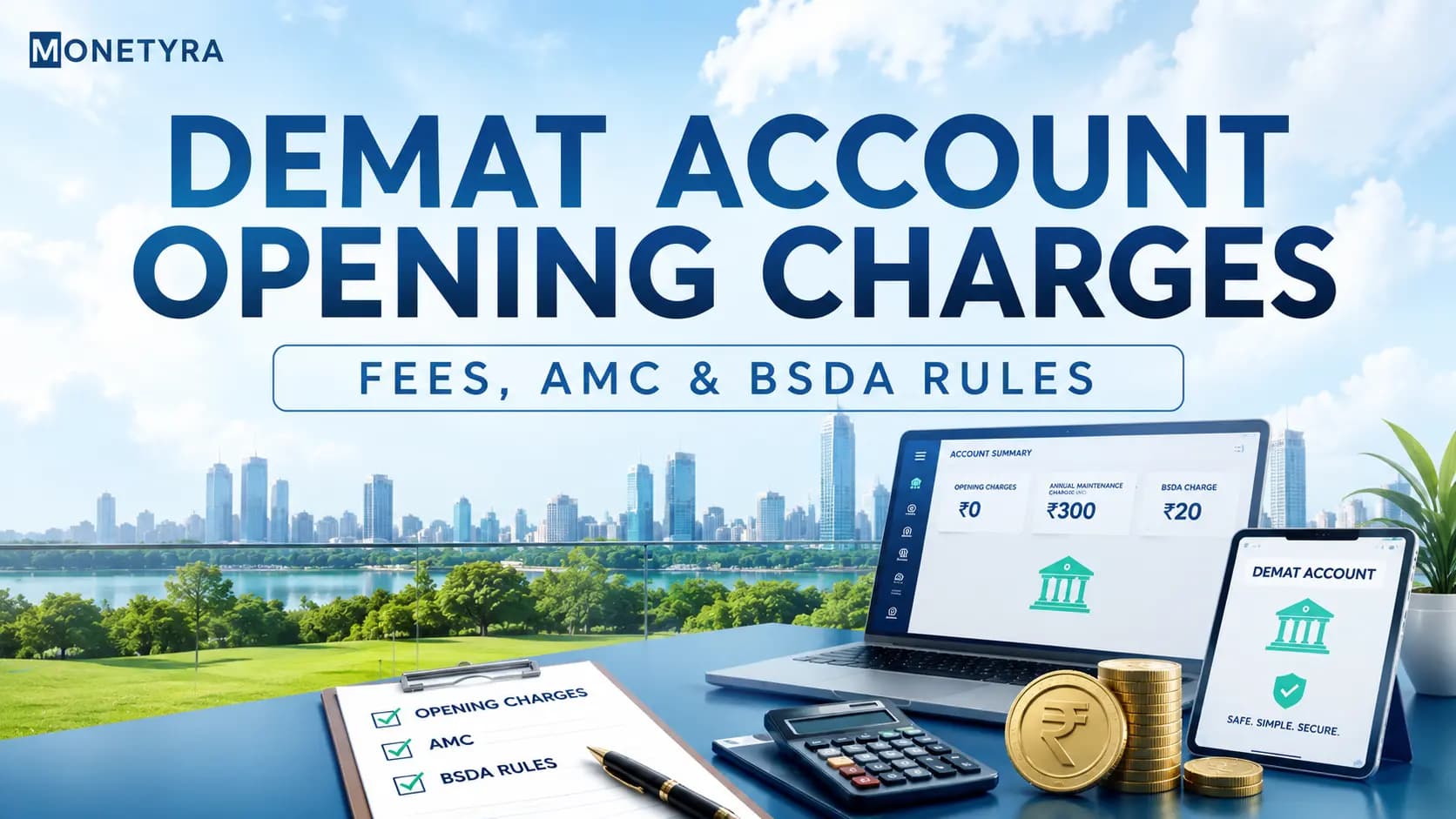
Imagine renting a secure digital safety deposit box at a bank. The bank might offer zero initial setup fee to hand you the digital key, but holding items in that vault still requires recurring annual maintenance rent. Additionally, whenever you step in to transfer items out of the vault, a nominal processing fee applies.
In the Indian stock market, evaluating these fees requires looking past the front-door promotional offers. While opening a trading and Demat account is advertised as zero-cost across major brokers, retail investors must navigate recurring holding costs like Annual Maintenance Charges (AMC), per-debit Depository Participant (DP) charges, and statutory taxes enforced under Securities and Exchange Board of India (SEBI) guidelines.
Quick Takeaways
- Core Definition: The demat account opening charges framework represents the processing fees, annual maintenance costs, and depository debit charges levied by stockbrokers to store electronic securities in India.
- Primary Mechanism: Depositories like NSDL and CDSL maintain electronic share vaults, where setup is frequently ₹0, but holding and selling assets incurs operational fees.
- Primary Risk / Limit: While selecting a zero-AMC broker minimizes account overhead, holding equity shares in a Demat account does not shield your capital from stock market volatility or trading losses.
What Are Demat Account Opening Charges in India?
These charges refer to the initial processing fees charged by depository participants to establish a retail investor’s electronic share holding vault.
When evaluating charges for opening demat account profiles, most online discount brokers offer zero-cost initial registration. However, full-service bank brokers or offline applications may charge upfront setup fees. Understanding demat account opening charges india requires separating upfront setup costs from ongoing account maintenance:
- Initial Setup Fees: Ranging from ₹0 to ₹500, depending on whether you register online via Aadhaar paperless KYC for Demat Account or submit physical documents.
- Identity Verification Costs: In-Person Verification (IPV) and KYC re-checks are bundled into the initial onboarding process by licensed stockbrokers.
Tips: Verify that your broker provides paperless online KYC re-verification so you avoid paying physical processing fees during account setup.
Recurring Demat Fees: AMC and DP Charges
Opening an account is only the first step; maintaining electronic equity holdings introduces recurring operational charges.
- Annual Maintenance Charge (AMC): A recurring holding fee (typically ₹0 to ₹800 + GST annually) charged by brokers to maintain your account connection with NSDL or CDSL depositories.
- Depository Participant (DP) Charges: Flat debit fees (typically ₹10 to ₹20 + GST per stock ISIN) automatically deducted whenever you sell shares from your Demat account.
- Statutory Taxes: An 18% Goods and Services Tax (GST) applies to all AMC fees, DP charges, and brokerage transactions.
Warning: DP sell charges apply per stock company sold per day, regardless of whether you sell 1 share or 1,000 shares of that specific entity.
SEBI BSDA Rules: Zero AMC for Small Investors
To protect retail market participants, SEBI mandates a specialized account structure called the Basic Services Demat Account (BSDA). Under updated SEBI Regulations, small investors enjoy statutory AMC exemptions based on their holding value:
- Holdings up to ₹4 Lakhs: Retail investors with total portfolio value under ₹400,000 pay zero AMC (₹0).
- Holdings between ₹4 Lakhs and ₹10 Lakhs: AMC is capped at ₹100 per year + 18% GST.
- Holdings above ₹10 Lakhs: Standard regular Demat account AMC rates apply.
Investors registering for BSDA accounts must also complete mandatory Nomination in Demat Account details to prevent un-claimed assets.
Demat Account Opening Charges Comparison
Conducting this comparison helps traders choose the Best Demat Account in India based on their specific trading frequency and portfolio size. Listed shares trade seamlessly across the National Stock Exchange (NSE) and Bombay Stock Exchange (BSE) regardless of your depository choice.
| Broker Platform | Account Opening Fee | Annual Maintenance Charge (AMC) | DP Sell Charge (per ISIN) |
|---|---|---|---|
| Zerodha | ₹0 | ₹0 (holdings < ₹4L) / ₹300 per year | ₹13.50 + GST |
| Groww | ₹0 | Free (₹0) | ₹13.50 + GST |
| Angel One | ₹0 | ₹0 1st Year (₹240/year after) | ₹20.00 + GST |
| ICICI Direct | ₹0 | ₹700 per year (waived 1st year) | ₹20.00 + GST |
Conclusion
Understanding these fees ensures you look beyond promotional zero-cost setup banners before selecting an Indian brokerage platform. By evaluating annual maintenance fees, per-debit DP charges, and leveraging SEBI BSDA exemptions for smaller portfolios, you can significantly reduce ongoing trading overhead. Always re-verify fee schedules directly on official broker portals prior to completing account registration.
Learn stock market fundamentals, demat account opening, regulatory rules, and trading basics.
FAQs
Most Indian discount brokers charge ₹0 for online account opening, while full-service banks or paper-based registrations may charge ₹300 to ₹500.
While initial account creation is free across many platforms, holding shares incurs ongoing costs like Annual Maintenance Charges (AMC) and per-sale DP debit fees.
AMC stands for Annual Maintenance Charge, a yearly operational fee (ranging from ₹0 to ₹800 + GST) billed by brokers to maintain your depository account.
DP (Depository Participant) charges are flat transaction fees (₹10 to ₹20 + GST) debited whenever you sell shares from your Demat holding vault.
Platforms like Groww offer permanent ₹0 AMC, while Zerodha and other brokers offer ₹0 AMC for small retail portfolios under SEBI BSDA guidelines.
Under SEBI Basic Services Demat Account (BSDA) rules, investors holding securities valued up to ₹4 Lakhs pay zero AMC (₹0), while portfolios between ₹4 Lakhs and ₹10 Lakhs pay a capped ₹100/year AMC
Disclaimer: This article was written with the help of AI and reviewed by the Monetyra editorial team. It is for educational purposes only and should not be considered financial, legal, or investment advice. Investing and trading in financial instruments involve significant risk of capital loss. Please consult a licensed financial advisor before executing investment decisions.
In India, depository operations and Demat account structures are governed by SEBI directives. Readers are advised to verify official tariff sheets of depository participants before opening accounts.