SIP and Lumpsum: Which Is Better for Beginners
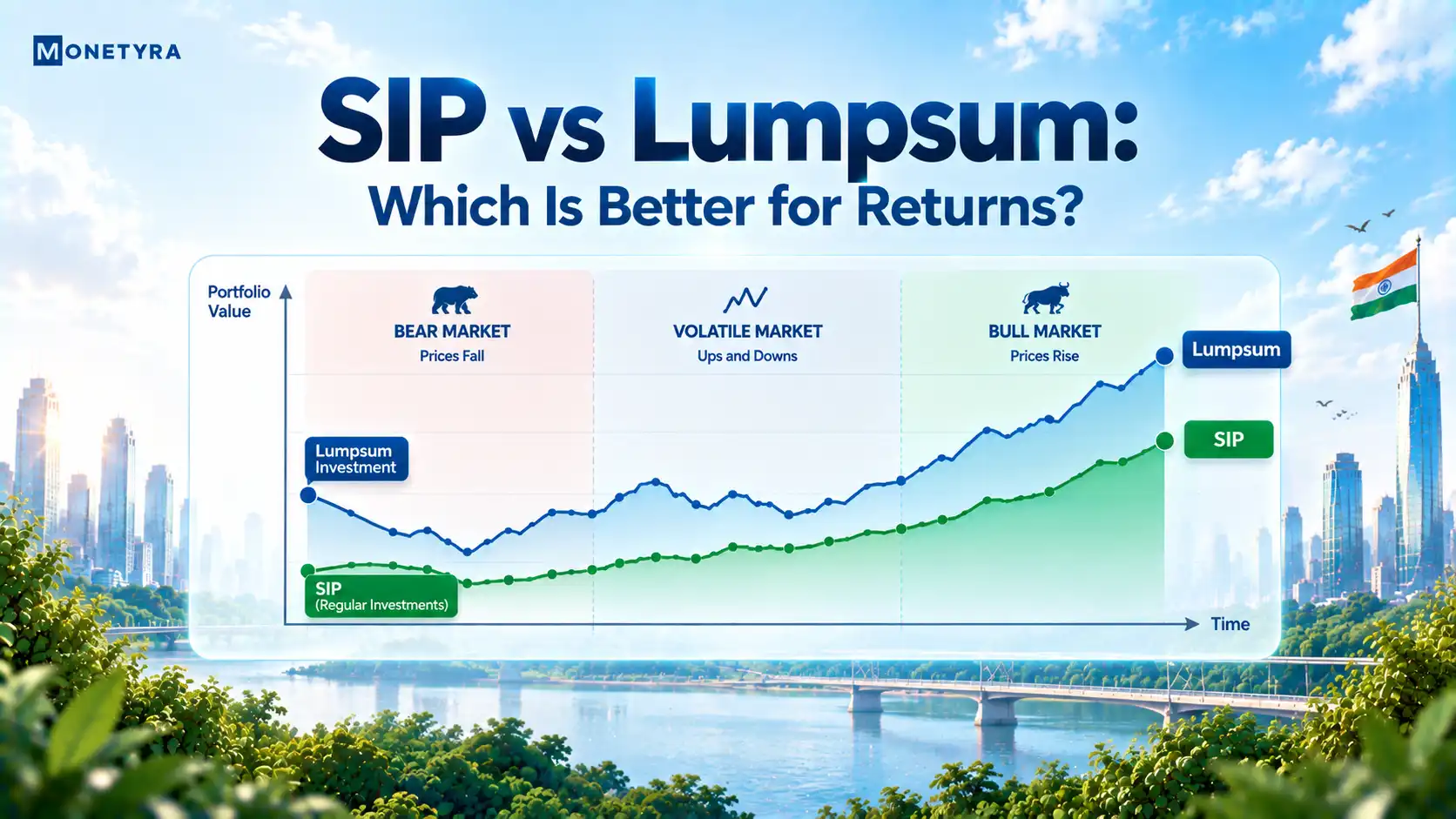
Starting your investment journey is exciting, but it also comes with its fair share of questions — and “SIP or lumpsum?” is often one of the first big ones beginners face. The truth is, there’s no universally right answer; it depends on your cash flow, your comfort with market ups and downs, and how soon you want your money working for you. Getting this choice right early on can make your investing experience feel steady and confidence-building, rather than stressful, so it’s worth taking a moment to understand both paths before you dive in.
Quick Takeaways
- The SIP vs Lumpsum decision pits recurring automated micro-investments against a single upfront capital deployment into mutual funds.
- Systematic Investment Plans (SIP) utilize rupee cost averaging to smooth out volatility in equity markets, whereas lumpsum investments may generate higher compounding returns during long bull runs.
- Every SIP payment is treated as an independent investment for holding periods, requiring each tranche to complete 12 months for equity long-term capital gains tax treatment.
What Is the Difference Between SIP and Lumpsum?
A Systematic Investment Plan (SIP) allows you to invest a fixed amount of money at recurring intervals into a mutual fund scheme, whereas a lumpsum investment involves committing a single sum of capital all at once.
Regulated by the Securities and Exchange Board of India (SEBI), both methods grant access to the same underlying equity or debt portfolios managed by asset management companies (AMCs). However, understanding the core What Is SIP in Mutual Fund mechanics reveals that an SIP builds discipline through automated bank debits, while a lumpsum approach relies on having available capital upfront.
When choosing between SIP vs Lumpsum, retail investors must match their available cash flow with their risk tolerance and current market conditions.
Tips: You do not need to choose exclusively; many investors maintain a monthly SIP for regular income while deploying additional lumpsum capital during market dips.
How Rupee Cost Averaging Works in SIP
The primary advantage of an SIP in volatile markets like the National Stock Exchange (NSE) is rupee cost averaging.
When stock prices fall, your fixed monthly SIP payment buys more mutual fund units at lower Net Asset Values (NAV). Conversely, when prices rise, your fixed installment purchases fewer units. Over time, this mechanism lowers your average cost per unit without requiring you to time market peaks and troughs.
In contrast, a lumpsum investment buys all units at a single NAV point. If you deploy a large sum right before a market correction, your entire portfolio experiences immediate drawdown, requiring patience until prices recover.
Example: Imagine buying vegetables every week — some weeks prices are high, some weeks low, but you just buy the same amount regularly. SIP works the same way: you invest a fixed sum monthly, buying more units when prices are low and fewer when prices are high. Over time, this averages out your cost, without you ever having to guess the “right” time to invest.
SIP vs Lumpsum: Which Is Better for Returns?
Here’s the good news for you as a beginner. Evaluating SIP vs Lumpsum returns and deciding SIP vs Lumpsum which is better depends heavily on overall market direction during your investment horizon:
| Parameter | Systematic Investment Plan (SIP) | Lumpsum Investment |
|---|---|---|
| Capital Requirement | Low (starts as low as ₹100 or ₹500/month) | High (requires lump sum capital upfront) |
| Market Timing Risk | Low (smoothed out over multiple market cycles) | High (vulnerable to buying at market highs) |
| Ideal Market Phase | Volatile, range-bound, or declining markets | Early stages of a bull market or major dip |
| Unit Accumulation | Dynamic (buys more units when NAV falls) | Fixed (all units purchased at entry NAV) |
| Behavioral Bias | Minimal (automated debits remove emotion) | High (investors hesitate waiting for dips) |
SIP: Fixed Installment → Variable NAV → Lower Average Unit Cost Over Time
Lumpsum: Single Capital Sum → Fixed Entry NAV → Full Compounding Across All Units
Using an online SIP vs Lumpsum calculator or a broader Mutual Fund Returns Calculator helps project how compound growth varies across these two deployment strategies under different return assumptions. However subject to market timing risk.

How Capital Gains Tax Applies: SIP vs Lumpsum
Taxation on capital gains under rules enforced by the Income Tax Department applies differently depending on how your capital enters the fund.
For equity mutual funds:
- Lumpsum Taxation: The entire investment has a single purchase date. Holding the units for less than 12 months attracts Short-Term Capital Gains (STCG) tax at 20%. Holding for 12 months or longer qualifies as Long-Term Capital Gains (LTCG), taxed at 12.5% on gains exceeding ₹1.25 lakh per fiscal year.
- SIP Taxation: Every individual SIP installment is treated as an independent investment with its own distinct 12-month holding period. The FIFO (First-In, First-Out) method applies upon redemption, meaning units bought through your first SIP payment mature first for LTCG status.
- When you sell your SIP investments, your oldest units are sold first (FIFO), and each batch is taxed based on how long that batch was held — not your overall investment period.
Warning: Redeeming an entire SIP portfolio after 12 months from your start date will trigger STCG tax on any installments made within the last 11 months. Tax rules and rates are subject to change by the government; confirm current rates with official Income Tax Department sources before making decisions.
SIP vs Lumpsum for Beginners: How to Decide
Evaluating SIP vs Lumpsum for beginners comes down to cash flow availability and risk management. Some salaried beginners may find SIPs helpful for building disciplined habits, though the right choice depends on individual circumstances and should be discussed with a licensed advisor. Conversely, a lumpsum approach excels when investing windfalls, annual bonuses, or capital during market corrections. By aligning your strategy with your financial goals, you can build a resilient portfolio over time.
Conclusion
Deciding whether SIP vs Lumpsum suits your strategy comes down to matching your personal financial reality with market dynamics. While SIPs remove emotional bias and smooth out market swings through rupee cost averaging, lumpsum investments allow all your capital to compound immediately during strong market uptrends. Ultimately, combining both strategies—maintaining a core SIP while deploying tactical lumpsum amounts during market dips—often provides the optimal balance for long-term investors.
Learn how to calculate fund returns, understand SEBI scheme rules, and build long-term wealth with our practical beginner guides.
Disclaimer: This article was written with the help of AI and reviewed by the Monetyra editorial team. It is for educational purposes only and should not be considered financial advice. Trading and investing in financial instruments involve significant risk of loss and are not suitable for all investors. Please consult a licensed financial advisor before making any investment decision.
In India, mutual fund schemes are regulated by the Securities and Exchange Board of India (SEBI) and monitored by the Association of Mutual Funds in India (AMFI). Investors should read all scheme-related documents carefully before investing.
FAQs
An SIP spreads your investment across regular installments over time, whereas a lumpsum investment deploys your entire capital in a single transaction.
Neither is universally superior. SIPs are better for managing volatility and building discipline with regular income, while lumpsum investments offer higher compounding potential if deployed at attractive market valuations.
SIPs automatically buy more mutual fund units when market prices drop and fewer units when prices rise, lowering your average cost per unit over time. Lumpsum investments buy all units at a single entry price point.
Each SIP payment is treated as a separate purchase with its own 12-month holding timer for equity LTCG (12.5% above ₹1.25 lakh). Lumpsum investments have a single purchase date for the entire holding.
Yes, online calculators allow you to input your monthly SIP amount or single lumpsum figure alongside an estimated rate of return to project total expected wealth over your investment horizon.Note that actual returns may vary significantly from estimates and are not guaranteed.