What Is Emotional Trading? Common Mistakes and Solutions
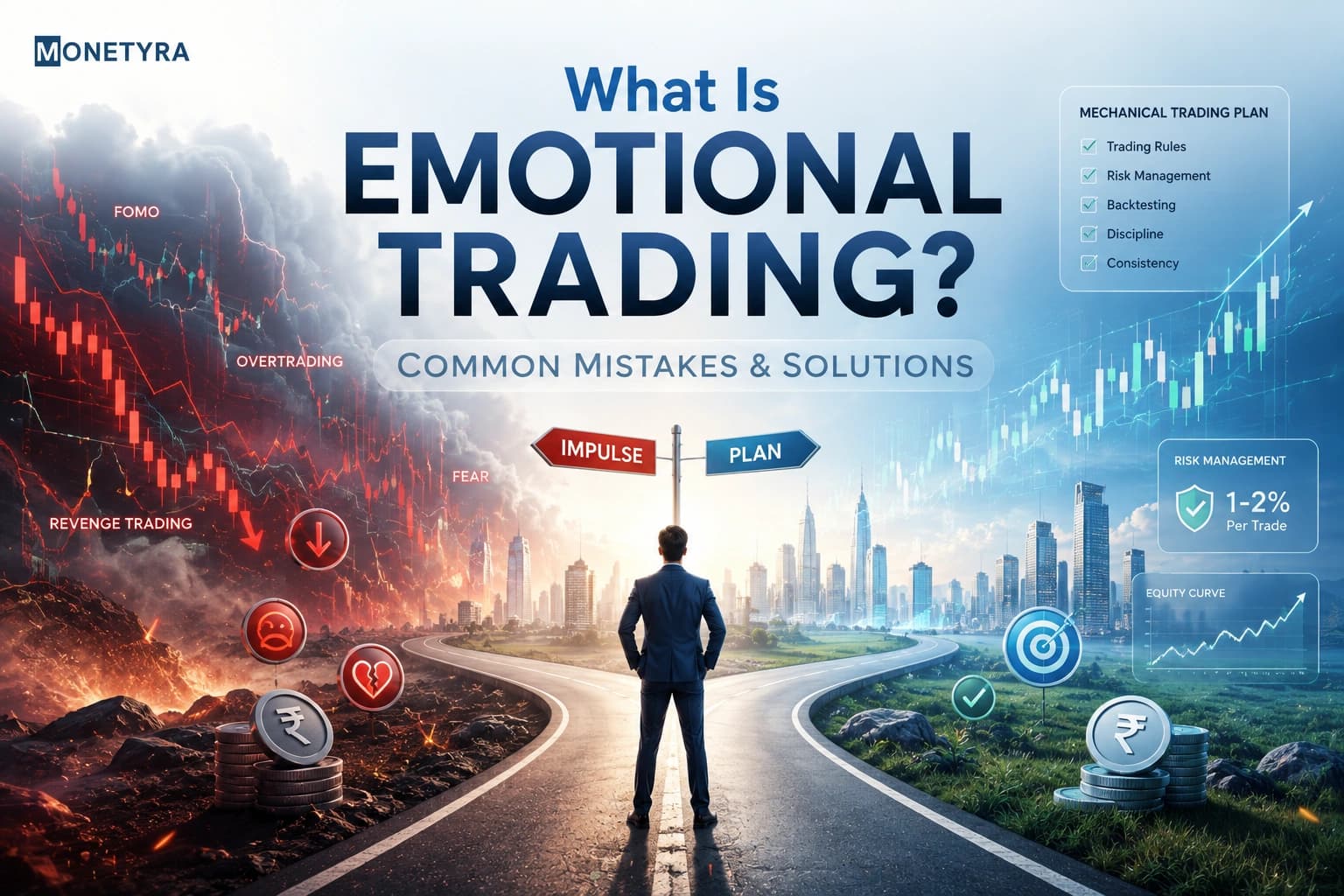
Imagine driving a vehicle on a busy highway. If you react strictly out of panic every time another driver cuts you off, a crash becomes almost inevitable. Defensive drivers follow established rules, check their mirrors, and stay calm. Financial trading works the exact same way. Many retail market participants fall into the trap of emotional trading, treating price fluctuations like a rollercoaster and letting temporary feelings dictate their decisions rather than following a mechanical strategy.
Quick Takeaways
- Emotional trading occurs when buy or sell orders are triggered by personal feelings like fear or greed rather than a rules-based strategy.
- Common mistakes of impulsive trading behavior include revenge trading, overtrading, and constantly moving stop-loss levels mid-trade.
- Developing strong trading psychology requires enforcing hard risk boundaries, logging trades in a journal, and automating execution rules.
What Is Emotional Trading?
Emotional trading refers to making buy or sell decisions based on immediate personal feelings—such as fear, greed, or frustration—rather than a pre-defined, rules-based strategy.
Understanding what is emotional trading begins with recognizing how human psychology interacts with market uncertainty. When money is on the line, the human brain naturally seeks pleasure (gains) and tries to avoid pain (losses). In financial markets, however, these natural human instincts often lead to counterproductive behavior, such as buying near market tops due to excitement or panic-selling near market bottoms.
In retail trading environments like the National Stock Exchange of India (NSE) or spot currency markets, short-term price movements contain high levels of noise. Mastering trading psychology means learning to detach your self-worth and mood from individual trade outcomes.
Tip: Treat every trade as a single statistical sample out of a hundred executed orders rather than a personal test of your intelligence.
The 4 Main Trading Emotions
The vast majority of psychological mistakes stem from four primary emotional states. Recognizing these feelings early allows you to pause before making an impulsive error:
- Fear: The anxiety of losing money or being wrong. Fear often leads traders to exit winning trades too early or avoid taking valid setups altogether.
- Greed: The overwhelming desire for excessive profits. Greed causes market participants to over-leverage their accounts, ignore position sizing rules, or hold trades long past their reasonable targets.
- Hope: The irrational expectation that a losing position will magically turn around. Hope keeps traders trapped in declining positions, turning small, manageable losses into significant account damage.
- Regret: The frustration of missing out on a profitable move. Regret leads traders to chase runaway prices late, entering right before a market retracement occurs.
Common Emotional Trading Mistakes
When emotions take control, traders repeatedly make predictable operational errors. The table below outlines the primary mistakes seen across retail financial markets:
| Operational Mistake | Underlying Emotional Trigger | Practical Market Consequence |
|---|---|---|
| Revenge Trading | Frustration / Anger | Opening immediate, reckless positions to win back capital lost on a previous trade. |
| Overtrading | Greed / Boredom | Executing excessive order volume without valid technical setups, eroding capital through transaction friction. |
| Moving Stop-Losses | Fear of Realizing a Loss | Extending stop boundaries mid-trade to avoid taking a small loss, inviting severe account drawdown. |
Revenge Trading
Revenge trading occurs when a trader experiences a loss and immediately opens a new, unanalyzed position out of anger. The objective shifts from following a strategy to “getting even” with the market. This emotional spiral frequently leads to compounding losses.
Overtrading
Retail participants frequently fall into overtrading when they feel compelled to be in the market constantly. Boredom or greed convinces the trader to force setups that do not meet their system guidelines, accumulating excessive brokerage fees and slippage in the process.
How to Stop Emotional Trading
Overcoming reactive habits requires structural guardrails rather than pure willpower. Learning how to prevent psychological errors depends on building a mechanical environment:
- Establish a Written Strategy: Document your precise entry criteria, risk per trade, and exit rules before opening your trading terminal.
- Set Automated Stop-Loss Orders: Place bracket or stop-loss orders immediately upon entry so your risk management is executed automatically by the broker.
- Maintain a Structured Record: Keep an updated trading journal to track both technical metrics and your emotional state during each execution.
- Implement Daily Loss Limits: Decide on a maximum capital loss allowance per day (e.g., 2% of account balance). If hit, shut down your platform until the next trading session.
Warning: Relying on mental stop-losses is one of the most common precursors to large account drawdowns because it requires emotional decision-making while under stress.
Emotional Trading in Indian Markets
Retail participation in high-volatility products like Nifty 50 and Bank Nifty index options has expanded rapidly across India. However, rapid price fluctuations in derivative contracts often trigger intense emotional responses.
In retail equity and options trading, sudden volatility spikes can make manual decision-making difficult. Establishing disciplined risk parameters is essential when navigating derivative products in Indian markets, as unmanaged positions can experience rapid capital erosion.
Conclusion
Controlling emotional reactions is a prerequisite for long-term consistency in financial markets. By understanding the psychological traps behind emotional trading, establishing firm pre-trade parameters, and logging every execution, you replace impulse with systematic discipline. Focus on executing your strategy correctly, and allow your statistical edge to operate without personal interference.
Master the behavioral rules, trading journal habits, and mental frameworks necessary to maintain emotional control in financial markets.
Disclaimer: This article was written with the help of AI and reviewed by the Monetyra editorial team. It is for educational purposes only and should not be considered financial advice. Trading and investing in financial instruments involve significant risk of loss and are not suitable for all investors. Please consult a licensed financial advisor before making any investment or trading decision.
In India, financial markets are regulated by the Securities and Exchange Board of India (SEBI) and the Reserve Bank of India (RBI). Retail traders are strongly advised to operate through SEBI-registered intermediaries and practice strict risk preservation guidelines at all times.
FAQs
It is the act of buying or selling financial assets based on temporary personal feelings like fear, greed, or frustration rather than sticking to a structured, mechanical strategy.
You can reduce emotional trading by defining strict written strategy rules, setting hard automated stop-loss orders, logging every trade in a record journal, and setting strict daily loss limits.
The four primary emotions in trading are fear, greed, hope, and regret. Each emotion distorts rational analysis and causes traders to depart from their risk management plans.
Common emotional mistakes include revenge trading (trying to win back lost money immediately), overtrading out of excitement or boredom, moving stop-losses mid-trade to avoid realizing a loss, and chasing runaway prices.
Emotion is detrimental to trading because financial markets operate on probabilities rather than personal feelings. Emotional decisions bypass cold statistical analysis, leading to inconsistent risk management and capital loss.
Fear causes traders to exit winning trades prematurely or hesitate on valid setups, while greed leads to over-leveraging, holding positions too long, and taking unnecessary risks.